Iron from plant foods: sources, needs and absorption
Iron-rich plant foods, why nonheme iron is absorbed less well, the 1.8 times figure for vegetarians, and how vitamin C and other foods affect uptake.
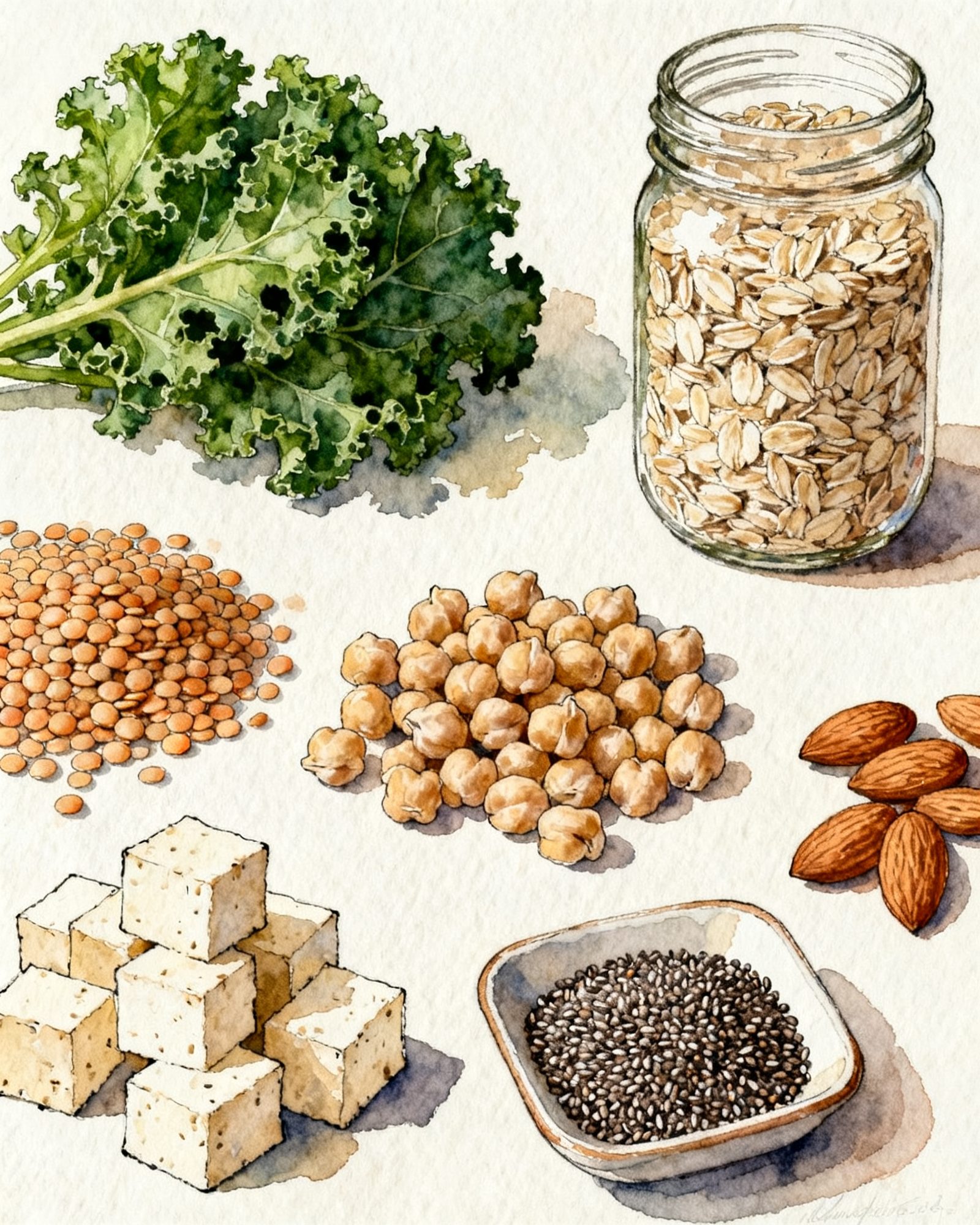
Iron is one of the nutrients a plant-based diet has to plan for, not because plants lack it but because the form they contain is harder to absorb. Beans, lentils, tofu, seeds, whole grains and fortified cereals all supply iron, and what you eat alongside them affects how much is absorbed. What follows covers the two kinds of dietary iron, how much you need, which plant foods carry the most, and what helps or hinders absorption, with figures from the NIH Office of Dietary Supplements (ODS), the Dietary Guidelines and USDA FoodData Central.
Heme and nonheme iron
The ODS health-professional page on iron explains the difference: “Dietary iron has two main forms: heme and nonheme. Plants and iron-fortified foods contain nonheme iron only, whereas meat, seafood, and poultry contain both heme and nonheme iron.”
Heme iron is the better-absorbed form, but even in meat-eating populations it is a minority of intake: ODS puts heme iron at about 10% to 15% of total iron intakes in western populations. Most of the iron everyone eats is nonheme, and in the United States about half of dietary iron comes from bread, cereal and other grain products.
How well the body absorbs iron overall depends on the whole diet. ODS gives approximate bioavailability of 14% to 18% from mixed diets that include substantial amounts of meat, seafood and vitamin C, and 5% to 12% from vegetarian diets.
How much iron you need
ODS lists these Recommended Dietary Allowances (RDAs) for adults:
| Group | Men | Women |
|---|---|---|
| 19-50 years | 8 mg | 18 mg |
| 51 years and older | 8 mg | 8 mg |
| Pregnancy | 27 mg | |
| Lactation | 9 mg |
From age 51 the RDA is the same for men and women.
For people who eat no meat, ODS adds a key qualification: “The requirement for iron is 1.8 times higher for people who follow vegetarian diets than those for people who include animal products in their diet, such as meat. This is because heme iron from meat is more bioavailable than nonheme iron from plant-based foods.” ODS states the figure for vegetarian diets in general; a doctor or registered dietitian can say what it means for your own intake.
On food labels, the FDA Daily Value for iron is 18 mg, and the FDA requires labels to list iron content, so the %DV on a package is an easy way to compare products.
Plant foods that supply iron
These rows come from the food table on the ODS iron page (amounts and %DV as ODS prints them):
| Food | Serving | Iron | %DV |
|---|---|---|---|
| Breakfast cereals, fortified with 100% of the DV for iron | 1 serving | 18 mg | 100 |
| White beans, canned | 1 cup | 8 mg | 44 |
| Lentils, boiled and drained | ½ cup | 3 mg | 17 |
| Spinach, boiled and drained | ½ cup | 3 mg | 17 |
| Tofu, firm | ½ cup | 3 mg | 17 |
| Chocolate, dark, 45%–69% cacao solids | 1 ounce | 2 mg | 11 |
| Kidney beans, canned | ½ cup | 2 mg | 11 |
| Chickpeas, boiled and drained | ½ cup | 2 mg | 11 |
| Tomatoes, canned, stewed | ½ cup | 2 mg | 11 |
| Potato, baked, flesh and skin | 1 medium potato | 2 mg | 11 |
| Cashew nuts, oil roasted | 1 ounce (18 nuts) | 2 mg | 11 |
ODS lists green peas, raisins, whole-wheat spaghetti, pistachios, broccoli, brown rice and whole-wheat bread at 1 mg per serving.
Several useful plant foods are not in that table. Their iron, calculated from USDA records:
| Food | Amount | Iron | Calories | USDA record |
|---|---|---|---|---|
| Soybeans (mature), boiled | 1/2 cup (86 g) | 4.4 mg | 148 | FDC 174271 |
| Black beans, boiled | 1/2 cup (86 g) | 1.8 mg | 114 | FDC 173735 |
| Split peas, boiled | 1/2 cup (98 g) | 1.3 mg | 116 | FDC 172429 |
| Edamame, frozen, prepared | 1/2 cup (78 g) | 1.8 mg | 94 | FDC 168411 |
| Tempeh | 3 oz (85 g) | 2.3 mg | 163 | FDC 174272 |
| Pumpkin seed kernels, roasted | 1 oz (28 g) | 2.3 mg | 163 | FDC 170557 |
| Hemp seeds, hulled | 1 oz (28 g) | 2.3 mg | 157 | FDC 170148 |
| Tahini (roasted sesame) | 2 tbsp (30 g) | 2.7 mg | 178 | FDC 170189 |
| Quinoa, cooked | 1 cup (185 g) | 2.8 mg | 222 | FDC 168917 |
| Oatmeal, cooked with water | 1 cup (234 g) | 2.1 mg | 166 | FDC 173905 |
| Dried figs | 1/2 cup (74 g) | 1.5 mg | 186 | FDC 174665 |
Calculated from USDA FoodData Central: the nutrient values per 100 g of each record, scaled to the gram weight USDA lists for the amount shown. Brands and varieties differ.
In the USDA table, boiled soybeans carry the most iron per half cup, and tahini, quinoa, pumpkin seeds, hemp seeds and tempeh each supply a solid amount per serving. Note how much the serving changes the picture: a cup of quinoa or oatmeal is a normal bowl, while two tablespoons of tahini is a generous drizzle.
Greens, grains, dried fruit and other foods
Lists of iron-rich plant foods also name leafy greens, tomato products, mushrooms, dark chocolate and dried fruit. Their amounts per usual serving, from USDA records:
| Food | Amount | Iron | Calories | USDA record |
|---|---|---|---|---|
| Natto (fermented soybeans) | 1/2 cup (88 g) | 7.5 mg | 185 | FDC 172443 |
| Navy beans, boiled | 1/2 cup (91 g) | 2.1 mg | 127 | FDC 173746 |
| Swiss chard, boiled | 1/2 cup (88 g) | 2.0 mg | 18 | FDC 170401 |
| Collard greens, boiled | 1/2 cup (95 g) | 1.1 mg | 31 | FDC 170407 |
| Kale, boiled | 1/2 cup (59 g) | 0.5 mg | 21 | FDC 169238 |
| White mushrooms, boiled | 1/2 cup (78 g) | 1.4 mg | 22 | FDC 169252 |
| Tomato paste, canned | 1/4 cup (66 g) | 2.0 mg | 54 | FDC 170459 |
| Sun-dried tomatoes | 1/4 cup (14 g) | 1.2 mg | 35 | FDC 168567 |
| Amaranth, cooked | 1 cup (246 g) | 5.2 mg | 251 | FDC 170683 |
| Sesame seeds, whole | 1 tbsp (9 g) | 1.3 mg | 52 | FDC 170150 |
| Dark chocolate, 70-85% cacao | 1 oz (28 g) | 3.4 mg | 170 | FDC 170273 |
| Dried apricots | 1/4 cup (32 g) | 0.9 mg | 78 | FDC 173941 |
| Prunes | 1/4 cup (44 g) | 0.4 mg | 104 | FDC 168162 |
Calculated from USDA FoodData Central: the nutrient values per 100 g of each record, scaled to the gram weight USDA lists for the amount shown. Brands and varieties differ.
Two things stand out. Natto, the fermented soybeans eaten in Japan, has more iron per half cup than anything else in either USDA table on this page, and cooked amaranth is the grain with the most per cup. The greens are a mixed group: Swiss chard holds its own per half cup, while boiled kale carries much less than its reputation suggests. Dried apricots and prunes contribute less than many lists imply. Blackstrap molasses often appears on such lists too, but USDA’s generic molasses record is not the blackstrap kind, so it is not shown here; check the Nutrition Facts label on the jar, which must list iron.
Why per-100-gram rankings mislead
Many iron charts rank foods per 100 grams. That puts dried herbs, sesame seeds and cocoa near the top, because they are dry and concentrated, while beans and cooked grains, which are mostly water, look ordinary. Nobody eats 100 grams of sesame seeds at a sitting, though; a tablespoon is a normal sprinkle. Comparing foods by the amount people actually eat, as both tables here do, shows that beans, lentils, soy foods and fortified cereals do most of the work in a plant-based diet, with seeds, greens and whole grains adding to them.
What helps and what hinders absorption
Because nonheme iron is sensitive to what it is eaten with, the rest of the plate matters.
Enhancers
ODS says vitamin C (ascorbic acid) “enhances the bioavailability of nonheme iron.” USDA FoodData Central records show vitamin C in foods that go naturally with iron-rich plant foods, such as red bell peppers, broccoli, oranges, lemon juice, strawberries, kiwifruit and tomatoes. ODS also notes that meat, poultry and seafood can enhance nonheme iron absorption, an enhancer a plant-based diet does not have.
Inhibitors
On the other side, ODS writes that “phytate (which is present in grains and beans) and certain polyphenols in some nonanimal foods (e.g., cereals, legumes) have the opposite effect. Unlike other inhibitors of iron absorption, calcium might reduce the bioavailability of both nonheme and heme iron.” Spinach is the classic example: “Some plant-based foods that are good sources of iron, such as spinach, have low iron bioavailability because they contain iron-absorption inhibitors, such as polyphenols.”
ODS also notes that experts recommend taking calcium and iron supplements at different times to avoid potential interference with the absorption of iron.
Tea, coffee and cast-iron pans
Iron advice often adds two more tips: keep tea and coffee away from iron-rich meals, and cook in cast-iron pans. Tea and coffee contain polyphenols, the family of compounds ODS names among the inhibitors in some plant foods, but the sources used on this page give no figures for either drink or for cookware. Having tea or coffee between meals rather than with them is a harmless habit if you want to follow it; just do not rely on it, or on a cast-iron pan, in place of eating iron-rich foods.
Keeping it in proportion
ODS adds an important caveat: “the effects of enhancers and inhibitors of iron absorption are attenuated by a typical western diet, so they have little effect on most people’s iron status.” Pairings cost nothing and are easy to make, but by that account no single meal makes or breaks your iron status. The 2025-2030 Dietary Guidelines advise vegetarians and vegans to “enhance mineral bioavailability through food preparation techniques.” The ODS page on zinc, a mineral that phytate also binds, gives a concrete example for zinc: soaking beans, grains and seeds in water for several hours before cooking them.
Cooking ideas that put the pairings to work
- Lentils with tomatoes and lemon. A pot of red lentil soup with canned tomatoes and a squeeze of lemon at the end puts iron and vitamin C in the same bowl.
- Beans with peppers and tomatoes. A bean-heavy vegan chili combines kidney, black and pinto beans with tomatoes and a red bell pepper.
- Tofu stir-fry with broccoli and peppers. Firm tofu is among the higher iron sources in the ODS table, and a stir-fry with broccoli and red pepper brings the vitamin C.
- Fortified cereal with fruit. Iron-fortified cereal with strawberries or orange segments is the simplest pairing of all. Check the Added Sugars line on the box too; natural sweeteners compared explains how syrups and other sweeteners count on the label.
- Tahini or seeds on grains. A quinoa bowl with a tahini-lemon dressing and a handful of pumpkin seeds stacks several iron sources at once.
A sample plant-based day
One way to put several sources into a single day, each paired with a vitamin C food:
- Breakfast: iron-fortified cereal or oatmeal with strawberries, or a tofu scramble with sautéed peppers and tomatoes.
- Lunch: a lentil soup or a white bean salad with lemon dressing, parsley and red bell pepper.
- Snack: a handful of pumpkin seeds and an orange.
- Dinner: a tofu or tempeh stir-fry with broccoli over quinoa, finished with sesame seeds.
Beans and lentils also supply protein, so the same meals do double duty; see protein on a plant-based diet for how much you need.
Pregnancy, children and anemia
Needs change most in pregnancy: ODS lists an RDA of 27 mg, the highest figure in the table above, and it gives the 1.8 times figure for vegetarian diets in general without a separate figure for pregnancy. Anyone pregnant and eating a plant-based diet should plan iron intake with their doctor or midwife rather than from a food list.
For children, the RDA depends on age and is not the adult figure. The FDA Daily Value of 18 mg used on labels applies to adults and children age 4 years and older, so the %DV on a cereal box is not a guide for a baby or toddler. For babies and young children on a plant-based diet, ask your pediatrician what your child needs and which foods supply it.
If you have been diagnosed with iron-deficiency anemia, a list of iron-rich foods is not a treatment plan. Follow the treatment your doctor sets; the foods on this page can sit alongside it but do not replace it.
When to see a doctor
The Dietary Guidelines for Americans, 2025-2030 list iron among the shortfalls seen in both vegetarian and vegan diets, and advise people who eat this way to “Monitor nutrient status periodically, especially for iron, vitamin B12, vitamin D, calcium, and iodine.” The Scientific Foundation behind the guidelines lists iron in the vegan supplement bundle only “when indicated.” If you are pregnant, suspect a deficiency, or simply want to know where you stand, ask your doctor about a blood test before taking an iron supplement, and a registered dietitian can help plan meals around the results.
Common questions
What plant foods are highest in iron?
In the NIH Office of Dietary Supplements food table, per the serving it lists, iron-fortified breakfast cereals lead, followed by canned white beans (per cup), then lentils, boiled spinach and firm tofu (per half cup). In USDA data, boiled soybeans, pumpkin seeds, hemp seeds, tahini and tempeh also supply iron.
Do vegetarians and vegans need more iron?
Yes. The NIH Office of Dietary Supplements states that the requirement for iron is 1.8 times higher for people who follow vegetarian diets, because heme iron from meat is more bioavailable than the nonheme iron in plant foods.
Does vitamin C help you absorb iron?
The NIH Office of Dietary Supplements says vitamin C (ascorbic acid) enhances the bioavailability of nonheme iron, the only form in plant foods. It also notes that in a typical western diet the effects of enhancers and inhibitors are attenuated, so pairing is a sensible habit rather than a rule for every meal.
Is spinach a good source of iron?
Spinach contains a fair amount of iron, but the NIH Office of Dietary Supplements points out that it has low iron bioavailability because it also contains absorption inhibitors such as polyphenols. Count it as one source among several rather than the main one.
What fruits are high in iron?
Fruit is not a major iron source. The NIH Office of Dietary Supplements lists seedless raisins at 1 mg per quarter cup, and USDA data show dried figs and dried apricots supplying some iron per serving. Fruit helps in another way: many fruits, such as oranges, strawberries and kiwifruit, supply vitamin C, which aids nonheme iron absorption.
Should I take an iron supplement on a vegan diet?
Not without testing. The 2025-2030 Dietary Guidelines advise vegans to monitor iron status periodically, and the Scientific Foundation behind them mentions iron supplements only when indicated. A doctor can check your iron levels and recommend a dose if you need one.
Sources
Read next
Calcium without dairy: plant sources and absorption
Calcium without dairy: how much adults need, the plant foods and fortified drinks that supply it, calcium-set tofu, and why spinach calcium is poorly absorbed.
Protein on a plant-based diet: how much and from where
How much protein you need on a plant-based diet: the RDA, the 2025-2030 guideline goal, how amino acids add up, and which plant-based protein foods carry most.
Omega-3s from plant foods: ALA, EPA, DHA and algae
ALA, EPA and DHA explained: adult Adequate Intakes for ALA, the richest plant sources, why conversion is limited, and algal oil as a vegan omega-3 source.
Vegan bean chili: thick, smoky and made with three beans
Thick vegetarian chili, fully vegan: kidney, black and pinto beans, blooming spices, what thickens it, canned vs. dried beans done safely, toppings, freezing.
Baked BBQ tofu with creamy cauliflower mash
Crispy baked tofu in a homemade barbecue sauce with a creamy dairy-free cauliflower mash: pressing, when the sauce goes on, storage and reheating.