Calcium without dairy: plant sources and absorption
Calcium without dairy: how much adults need, the plant foods and fortified drinks that supply it, calcium-set tofu, and why spinach calcium is poorly absorbed.
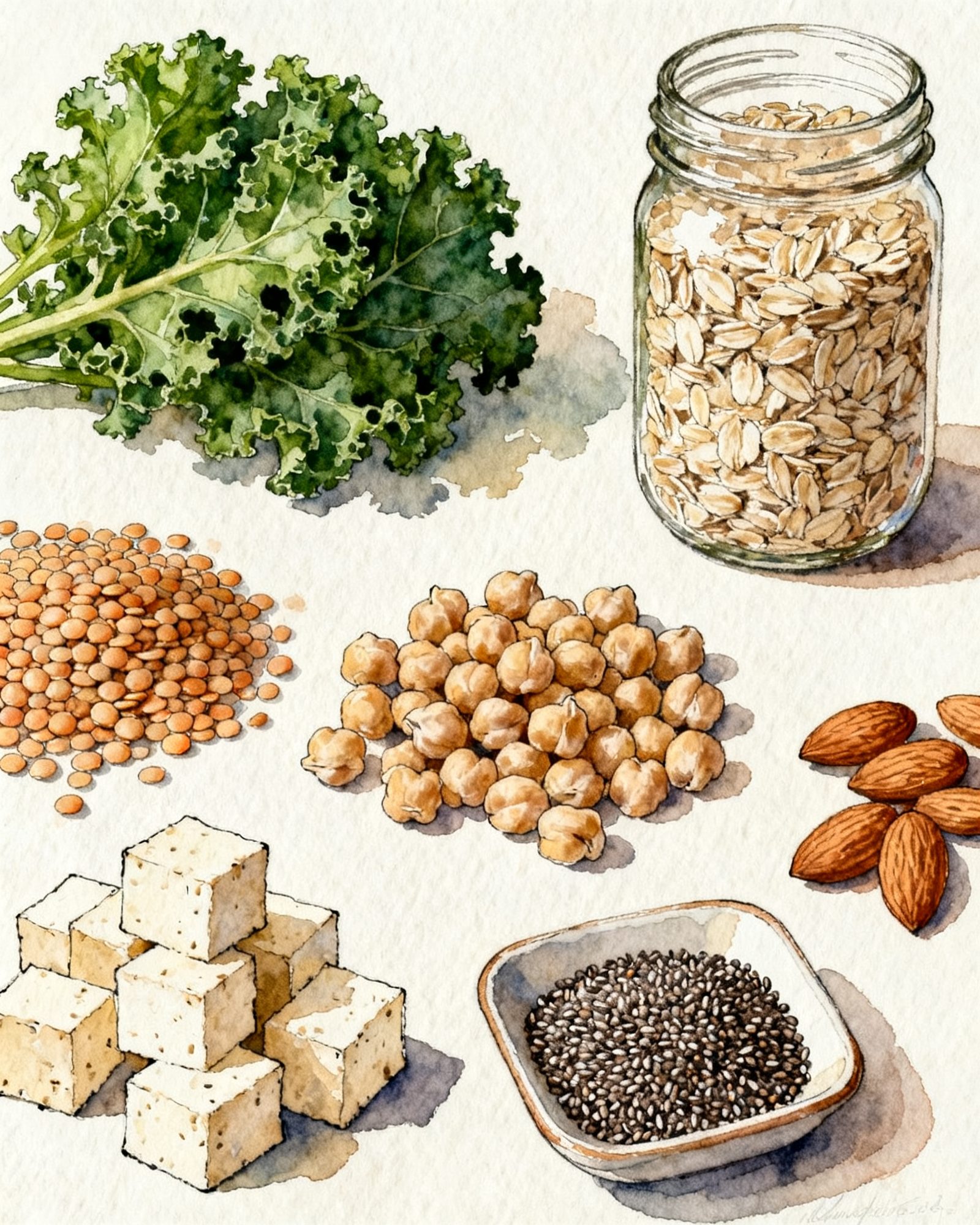
Dairy is the most familiar source of calcium in the American diet, but it is not the only one. Fortified soy milk and juice, tofu made with calcium salts, some leafy greens, beans, seeds and nuts all contribute, and some of them are absorbed as well as milk. Getting enough without dairy is possible, but it takes planning, because many plant foods carry modest amounts and a few carry calcium the body cannot use well. What follows sets out how much you need, which foods supply it, and what the federal guidelines say about dairy and its alternatives.
How much calcium adults need
The NIH Office of Dietary Supplements (ODS) lists these Recommended Dietary Allowances (RDAs):
| Age | Men | Women |
|---|---|---|
| 19-50 years | 1,000 mg | 1,000 mg |
| 51-70 years | 1,000 mg | 1,200 mg |
| Over 70 years | 1,200 mg | 1,200 mg |
For pregnant and breastfeeding adults aged 19-50 the RDA stays at 1,000 mg. ODS explains the step up for older women: “The calcium RDA is 1,200 mg for women older than 50 years (vs. 1,000 mg for younger women) to lessen bone loss after menopause.”
On food labels, the FDA Daily Value for calcium is 1,300 mg, and the FDA requires labels to list calcium content. The %DV on a carton of plant milk or a package of tofu is therefore the quickest way to compare products.
ODS is direct about people who avoid dairy, including vegans: they “have a higher risk of inadequate calcium intakes” and, although they can obtain calcium from nondairy sources, “these individuals typically need to eat foods fortified with calcium or take supplements to obtain recommended amounts.” The Academy of Nutrition and Dietetics, in its 2025 position paper on vegetarian dietary patterns, makes the same point more briefly: “Calcium can also be a concern for vegans.”
Non-dairy foods that supply calcium
These rows come from the food table on the ODS calcium page (amounts and %DV as ODS prints them):
| Food | Serving | Calcium | %DV |
|---|---|---|---|
| Orange juice, calcium fortified | 1 cup | 349 mg | 27 |
| Soymilk, calcium fortified | 1 cup | 299 mg | 23 |
| Tofu, firm, made with calcium sulfate | ½ cup | 253 mg | 19 |
| Tofu, soft, made with calcium sulfate | ½ cup | 138 mg | 11 |
| Soybeans, cooked | ½ cup | 131 mg | 10 |
| Breakfast cereals, fortified with 10% of the DV for calcium | 1 serving | 130 mg | 10 |
| Spinach, boiled, drained | ½ cup | 123 mg | 9 |
| Turnip greens, fresh, boiled | ½ cup | 99 mg | 8 |
| Kale, fresh, cooked | 1 cup | 94 mg | 7 |
| Chia seeds | 1 tablespoon | 76 mg | 6 |
| Chinese cabbage (bok choi), raw, shredded | 1 cup | 74 mg | 6 |
| Beans, pinto, canned, drained | ½ cup | 54 mg | 4 |
| Tortilla, corn, one, 6” diameter | 1 | 46 mg | 4 |
| Bread, whole wheat | 1 slice | 30 mg | 2 |
| Kale, raw, chopped | 1 cup | 24 mg | 2 |
| Broccoli, raw | ½ cup | 21 mg | 2 |
In these rows, the fortified drinks and firm calcium-set tofu sit well above the rest. Greens, beans and grains supply smaller amounts that still add up over a day.
Other plant foods that are not in the ODS table, calculated from USDA records:
| Food | Amount | Calcium | Calories | USDA record |
|---|---|---|---|---|
| Collard greens, boiled | 1 cup, chopped (190 g) | 268 mg | 63 | FDC 170407 |
| Bok choy, boiled | 1 cup, shredded (170 g) | 158 mg | 20 | FDC 170391 |
| Tahini (roasted sesame) | 2 tbsp (30 g) | 128 mg | 178 | FDC 170189 |
| Sesame seeds, whole | 1 tbsp (9 g) | 88 mg | 52 | FDC 170150 |
| Almonds | 1 oz (28 g) | 76 mg | 164 | FDC 170567 |
| Dried figs | 1/2 cup (74 g) | 121 mg | 186 | FDC 174665 |
| Navy beans, boiled | 1/2 cup (91 g) | 63 mg | 127 | FDC 173746 |
| Edamame, frozen, prepared | 1/2 cup (78 g) | 49 mg | 94 | FDC 168411 |
| Tempeh | 3 oz (85 g) | 94 mg | 163 | FDC 174272 |
Calculated from USDA FoodData Central: the nutrient values per 100 g of each record, scaled to the gram weight USDA lists for the amount shown. Brands and varieties differ.
In the USDA table, a cup of boiled collard greens carries the most calcium, followed by bok choy, tahini and dried figs. Cooked greens collapse as they wilt, so a cup of cooked greens holds far more leaves than a cup of raw ones, which is why a cup of cooked bok choy here carries more than the cup of raw bok choy in the ODS table. Collards, though, are one of the greens ODS lists as high in oxalic acid, which reduces calcium absorption (next section), so they are less useful than their milligrams suggest.
Absorption: why the milligrams are not the whole story
How much calcium the body takes up depends on the food. ODS gives the baseline: “The absorption of calcium from dairy products and fortified foods is about 30%.”
Some plants hold on to their calcium. ODS explains: “Certain compounds in plants (e.g., oxalic acid, phytic acid) can decrease calcium absorption by forming indigestible salts with calcium. As a result, absorption of calcium is only 5% for spinach, whereas it is much higher, at 27%, for milk.” It adds that “In addition to spinach, foods with high levels of oxalic acid include collard greens, sweet potatoes, rhubarb, and beans.”
Other greens do much better: “The bioavailability of calcium from other plants that do not contain these compounds—including broccoli, kale, and cabbage—is similar to that of milk, although the amount of calcium per serving is much lower.” That makes kale, broccoli and cabbage more useful calcium sources than their milligrams suggest, and spinach less useful than its milligrams suggest. Spinach is still a fine vegetable; just count on little of its calcium.
ODS also puts these interactions in perspective: “When people eat many different types of foods, these interactions with oxalic or phytic acid probably have little or no nutritional consequences.”
The share absorbed also falls as total intake rises. ODS notes that absorption of calcium from food is about 45% at intakes of 200 mg/day but only 15% when intakes are higher than 2,000 mg/day. Far more calcium does not mean proportionally more absorbed.
What a day of non-dairy calcium can look like
The ODS figures make it possible to check a day of ordinary vegan meals against the RDA. This example uses only rows from the ODS table above:
| Meal | Food (ODS row) | Calcium |
|---|---|---|
| Breakfast | Breakfast cereal fortified with 10% of the DV for calcium, 1 serving | 130 mg |
| Breakfast | Soymilk, calcium fortified, 1 cup, poured over the cereal | 299 mg |
| Lunch | Pinto beans, canned, drained, ½ cup, in two corn tortillas (46 mg each) | 54 mg + tortillas |
| Dinner | Tofu, firm, made with calcium sulfate, ½ cup | 253 mg |
| Dinner | Kale, fresh, cooked, 1 cup | 94 mg |
| Snack | Chia seeds, 1 tablespoon, in a pudding or smoothie | 76 mg |
Added up, that day comes to just under 1,000 mg, the RDA for most adults aged 19-50, before counting the smaller amounts in bread, vegetables and nuts. Take out the fortified soy milk and calcium-set tofu, and it falls far short, which is the practical meaning of the ODS statement that people who avoid dairy “typically need to eat foods fortified with calcium or take supplements.” Swapping in a cup of calcium-fortified orange juice (349 mg in the ODS table) is another way to close a gap. Products vary, so the Nutrition Facts label of what you actually buy gives the real figure.
Calcium-set tofu: read the ingredient list
Tofu is made by curdling soy milk with a coagulant, and the coagulant decides how much calcium ends up in the block. ODS adds a footnote to its tofu rows: “Calcium content is for tofu processed with a calcium salt. Tofu processed with other salts does not provide significant amounts of calcium.” Look for calcium sulfate in the ingredient list, and compare the %DV for calcium on the Nutrition Facts panel. Firm and extra-firm calcium-set tofu is the most versatile for cooking, and pressing it first gives a better texture when baking or pan-frying; see how to press tofu.
Fortified plant milks and juices
ODS lists “many fruit juices and drinks, milk substitutes (e.g., soy and almond beverages), tofu, and ready-to-eat cereals” among the foods fortified with calcium in the United States. Fortification varies by product, so the label is the only reliable guide; plant milks compared shows how little calcium an unfortified soy milk carries in USDA data. Sweetened and flavored versions also add sugar, which counts as added sugar on the label even when it comes from syrups or fruit juice concentrate; natural sweeteners compared explains why. The plant milk comparison also covers protein and sugars.
What the Dietary Guidelines say about dairy and its alternatives
The two most recent editions of the Dietary Guidelines treat plant milks differently, so it helps to know which one you are reading.
- The Dietary Guidelines for Americans, 2020-2025 (the previous edition) included fortified soy beverages and soy yogurt in the dairy group “because they are similar to milk and yogurt based on nutrient composition and in their use in meals.” Other plant “milks”, such as almond, rice, coconut, oat and hemp, “may contain calcium and be consumed as a source of calcium,” but were not counted toward the dairy group because their overall nutritional content is not similar to dairy milk and fortified soy beverages.
- The Dietary Guidelines for Americans, 2025-2030 (the current edition since January 2026) advise, “When consuming dairy, include full-fat dairy with no added sugars,” with 3 servings a day in a 2,000-calorie pattern. The 10-page document itself does not mention soy or other plant milks, but the Daily Servings chart that accompanies it defines the dairy group to include “Lactose-free and lactose-reduced products, as well as fortified dairy alternatives.”
Both editions leave room for people who do not drink milk: the previous one through fortified soy products, the current one through fortified dairy alternatives in its servings chart. The 2020-2025 edition also named calcium among the “dietary components of public health concern for the general U.S. population because low intakes are associated with health concerns.”
Vitamin D: the nutrient printed next to calcium
Vitamin D is usually added to the same fortified foods as calcium, and it is a planning point of its own for vegans. The NIH Office of Dietary Supplements lists an RDA of 15 mcg (600 IU) a day for adults aged 19 through 70; over 70, the RDA is 20 mcg (800 IU). ODS also notes that “Diets low in vitamin D are more common in people who have milk allergy or lactose intolerance and those who consume an ovo-vegetarian or vegan diet.” Its plant sources are limited:
- Fortified plant milks: ODS says soy, almond and oat beverages “are often fortified with similar amounts of vitamin D to those in fortified cow’s milk (about 3 mcg [120 IU]/cup); the Nutrition Facts label lists the actual amount.”
- UV-treated mushrooms: ODS lists white mushrooms exposed to UV light at 9.2 mcg per ½ cup, against 0.1 mcg for untreated portabella.
- Fortified cereals: a serving fortified with 10% of the DV supplies 2.0 mcg.
The FDA requires vitamin D on the Nutrition Facts label in mcg per serving, so the same carton you check for calcium shows it too.
Supplements and when to ask for advice
ODS names fortified foods or supplements as the usual way for people who avoid dairy to reach the recommended amount, and the Scientific Foundation for the 2025-2030 guidelines includes calcium in the vegan supplement bundle “when indicated.” The ODS iron page notes that calcium might reduce iron absorption and that experts recommend taking calcium and iron supplements at different times; iron from plant foods covers that side. The 2025-2030 Dietary Guidelines advise vegans to monitor nutrient status periodically, including calcium. If you take a combined calcium and vitamin D supplement and eat fully vegan, check which form of vitamin D it contains: ODS says vitamin D3 in supplements “is typically produced with irradiation of 7-dehydrocholesterol from lanolin obtained from the wool of sheep,” and that “An animal-free version of vitamin D3 sourced from lichen is also available.”
If you are pregnant, past menopause, have a history of fractures or a condition that affects your bones, ask your doctor or a registered dietitian how much calcium you need and whether a supplement makes sense. Children’s calcium needs differ by age, so for a child or teenager on a dairy-free diet, ask their pediatrician or a registered dietitian.
Common questions
How can I get enough calcium without dairy?
Build meals around fortified foods and well-absorbed plant sources: calcium-fortified soy milk or orange juice, tofu made with calcium sulfate, and greens such as kale, broccoli and cabbage, whose calcium is absorbed about as well as milk's. The NIH Office of Dietary Supplements notes that people who avoid dairy typically need fortified foods or supplements to reach the recommended amount.
Do you need dairy to have strong bones?
Dairy is one convenient source of calcium, not the only one. The Daily Servings chart for the 2025-2030 Dietary Guidelines lists fortified dairy alternatives as options within the dairy group, and among the non-dairy foods in its calcium table, the NIH Office of Dietary Supplements lists fortified orange juice, fortified soy milk and calcium-set tofu with the most calcium per serving.
What is calcium-set tofu?
Tofu that was coagulated with a calcium salt such as calcium sulfate, which appears in the ingredient list. The NIH Office of Dietary Supplements says the calcium figures for tofu apply only to tofu processed with a calcium salt; tofu made with other salts does not provide significant amounts of calcium.
Is spinach a good source of calcium?
Not a reliable one. Spinach contains calcium, but the NIH Office of Dietary Supplements notes that its oxalic acid binds the calcium, so absorption from spinach is only 5%, compared with 27% from milk. Kale, broccoli and cabbage carry less calcium per serving, but it is absorbed about as well as milk's.
Are calcium supplements vegan?
Often, but check the vitamin D. Many calcium supplements are combined with vitamin D3, which the NIH Office of Dietary Supplements says is typically made from lanolin from sheep's wool. ODS notes that an animal-free vitamin D3 sourced from lichen is also available, so look for that on the label if you eat fully vegan.
How much calcium is in fortified soy milk?
The NIH Office of Dietary Supplements lists calcium-fortified soymilk at 299 mg per cup, and says calcium absorption from dairy products and fortified foods is about 30%. The calcium is added during fortification and the amount varies by product, so check the label.
Sources
Read next
Protein on a plant-based diet: how much and from where
How much protein you need on a plant-based diet: the RDA, the 2025-2030 guideline goal, how amino acids add up, and which plant-based protein foods carry most.
What is nutritional yeast and how to use it
Nutritional yeast explained: what the flakes are, fortified vs unfortified, how much vitamin B12 the NIH lists, the niacin caution, and how to cook with it.
Natural sweeteners compared: maple, dates, coconut sugar
What maple syrup, agave, coconut sugar, dates, molasses and stevia are, how the FDA and Dietary Guidelines treat them, and how each one behaves in baking.
Baked BBQ tofu with creamy cauliflower mash
Crispy baked tofu in a homemade barbecue sauce with a creamy dairy-free cauliflower mash: pressing, when the sauce goes on, storage and reheating.
Tofu and cauliflower skewers with almond butter sauce
Marinated grilled tofu and cauliflower skewers (or bake them) with a creamy almond butter sauce: par-cooking, soaking skewers, marinade time and storage.