Omega-3s from plant foods: ALA, EPA, DHA and algae
ALA, EPA and DHA explained: adult Adequate Intakes for ALA, the richest plant sources, why conversion is limited, and algal oil as a vegan omega-3 source.
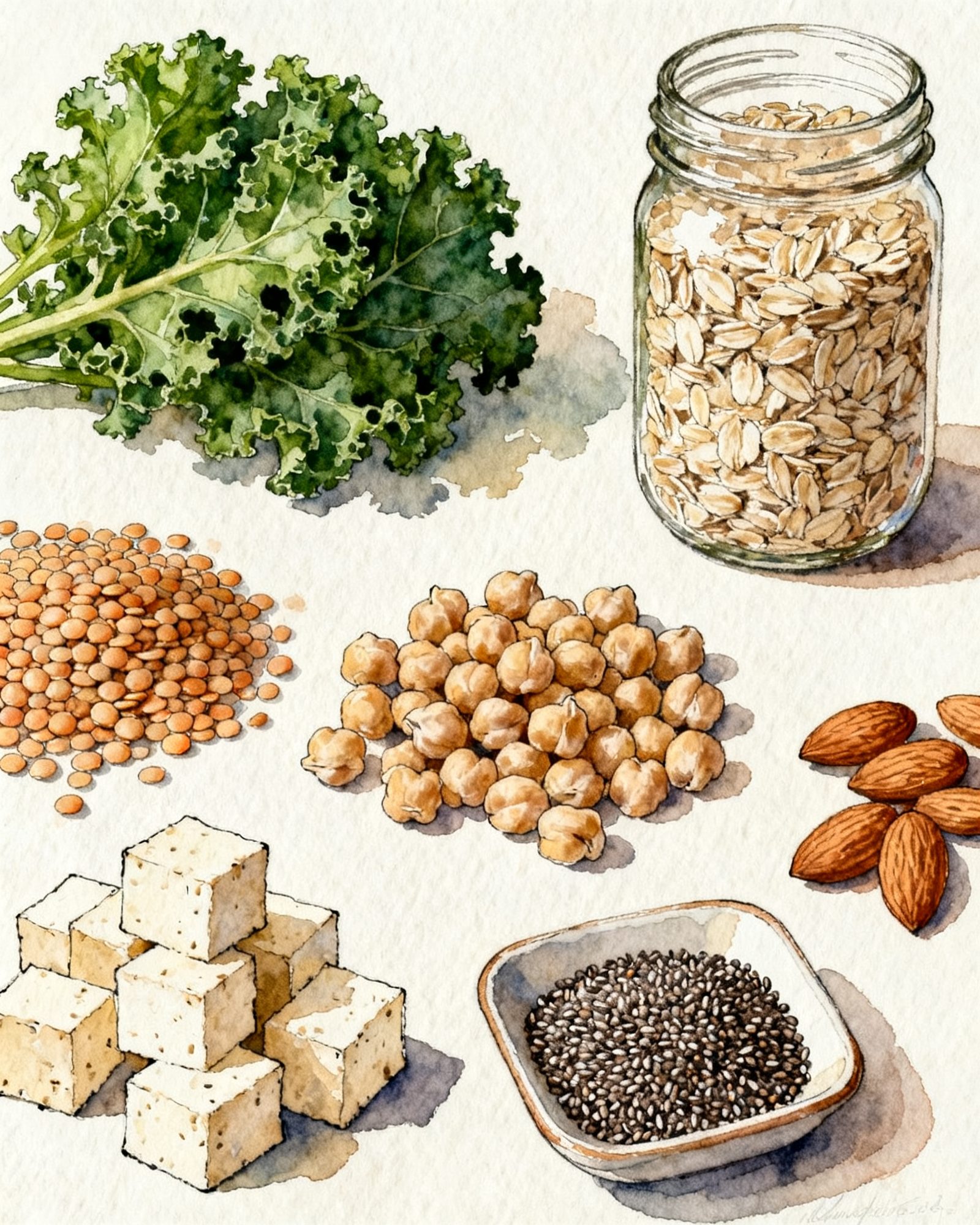
Omega-3 fatty acids are a family of fats, and a plant-based diet supplies one member of the family well and the other two hardly at all. Flaxseed, chia seeds, English walnuts and canola oil are rich in ALA, the omega-3 the body cannot make and must get from food. The long-chain omega-3s EPA and DHA, the ones fish are known for, are a different matter: plants do not supply them, and the body makes only small amounts from ALA. Algae close that gap. What follows covers the three omega-3s, how much ALA adults need, which foods carry it, and where algal oil fits.
ALA, EPA and DHA: three different fats
Three omega-3s matter for diet: alpha-linolenic acid (ALA), eicosapentaenoic acid (EPA) and docosahexaenoic acid (DHA). The NIH Office of Dietary Supplements (ODS) explains where each comes from.
- ALA is the plant omega-3. ODS: “Plant oils that contain ALA include flaxseed (linseed), soybean, and canola oils. Chia seeds and walnuts also contain ALA.”
- EPA and DHA are the long-chain omega-3s found in fish and seafood. They do not start in the fish: ODS notes that DHA and EPA “are originally synthesized by microalgae at the base of the marine food chain, not by the fish.” That fact is what makes a vegan source of DHA possible.
Only ALA is essential in the strict sense. ODS explains: “For age 1 and older, the AIs apply only to ALA because ALA is the only omega-3 that is essential. The IOM did not establish specific intake recommendations for EPA, DHA, or other LC omega-3s.”
How much ALA you need
The Institute of Medicine set Adequate Intakes (AIs) for ALA rather than RDAs. The ODS table gives, for adults aged 19 and older:
| Group | ALA per day |
|---|---|
| Men | 1.6 g |
| Women | 1.1 g |
| Pregnancy | 1.4 g |
| Lactation | 1.3 g |
The Academy of Nutrition and Dietetics repeats the adult figures in its 2025 position paper on vegetarian diets: “the adequate intake recommendation for ALA is 1.1 and 1.6 g/day for women and men, respectively.”
For context, ODS reports that in the 2011–2012 NHANES survey, average daily ALA intake from foods in adults age 20 and over was 1.59 g in women and 2.06 g in men.
The FDA has set a Daily Value for total fat but not for omega-3s, so Nutrition Facts labels show no %DV for them.
ODS also gives AIs by age for children; as the quote above says, from age 1 they apply only to ALA. Ask your pediatrician before giving a child any omega-3 supplement.
The richest plant sources of ALA
ODS gives these ALA amounts per serving:
| Food | Serving | ALA |
|---|---|---|
| Flaxseed oil | 1 tbsp | 7.26 g |
| Chia seeds | 1 ounce | 5.06 g |
| English walnuts | 1 ounce | 2.57 g |
| Flaxseed, whole | 1 tbsp | 2.35 g |
| Canola oil | 1 tbsp | 1.28 g |
| Soybean oil | 1 tbsp | 0.92 g |
| Black walnuts | 1 ounce | 0.76 g |
| Edamame, frozen, prepared | ½ cup | 0.28 g |
| Refried beans, canned, vegetarian | ½ cup | 0.21 g |
| Kidney beans, canned | ½ cup | 0.10 g |
Set against the AIs, the top four rows do the work: one serving of flaxseed oil, chia seeds, English walnuts or whole flaxseed supplies more ALA than either adult AI. A tablespoon of canola oil carries more than the women’s AI. Note the difference between the two walnuts: English walnuts, the common kind, carry more than three times as much ALA as black walnuts.
The same foods, plus hulled hemp seeds, differ a lot in calories, fat, fiber and protein. USDA values for typical servings:
| Food | Amount | Calories | Fat | Fiber | Protein | USDA record |
|---|---|---|---|---|---|---|
| Chia seeds | 1 tbsp (10 g) | 51 | 3.2 g | 3.6 g | 1.7 g | FDC 2707590 |
| Flaxseed, whole | 1 tbsp, whole (10 g) | 55 | 4.3 g | 2.8 g | 1.9 g | FDC 169414 |
| Flaxseed, ground | 1 tbsp, ground (7 g) | 37 | 3.0 g | 1.9 g | 1.3 g | FDC 169414 |
| Hemp seeds, hulled | 1 oz (28 g) | 157 | 14 g | 1.1 g | 9.0 g | FDC 170148 |
| English walnuts | 1 oz (28 g) | 185 | 18 g | 1.9 g | 4.3 g | FDC 170187 |
| Black walnuts | 1 oz (28 g) | 175 | 17 g | 1.9 g | 6.8 g | FDC 170186 |
| Flaxseed oil | 1 tbsp (14 g) | 120 | 14 g | 0.0 g | 0.0 g | FDC 167702 |
| Canola oil | 1 tbsp (14 g) | 124 | 14 g | 0.0 g | 0.0 g | FDC 172336 |
| Edamame, frozen, prepared | 1/2 cup (78 g) | 94 | 4.0 g | 4.0 g | 9.2 g | FDC 168411 |
Calculated from USDA FoodData Central: the nutrient values per 100 g of each record, scaled to the gram weight USDA lists for the amount shown. Brands and varieties differ.
The table does not include an ALA column; the ALA figures are the ODS amounts above. What it shows is the trade-off: the oils deliver their ALA as pure fat with no fiber or protein, while chia seeds and flaxseed bring fiber with them, and walnuts and hemp seeds bring protein.
Conversion: why ALA is not a substitute for DHA
The body can turn some ALA into EPA and DHA, but not much. ODS: “ALA can be converted into EPA and then to DHA, but the conversion (which occurs primarily in the liver) is very limited, with reported rates of less than 15%. Therefore, consuming EPA and DHA directly from foods and/or dietary supplements is the only practical way to increase levels of these fatty acids in the body.”
The Scientific Foundation for the Dietary Guidelines for Americans, 2025-2030 draws the conclusion for people who eat no fish: “Because plant-based ALA is converted to EPA and DHA inefficiently, vegans and vegetarians may not achieve adequate long-chain omega-3 levels from food alone. An algal DHA/EPA supplement is an effective way to meet these omega-3 needs.”
Algal oil: the vegan source of DHA
Algal oil comes from microalgae, the organisms ODS names as the original source of DHA and EPA. ODS lists “vegetarian products that contain algal oil” among supplements that contain long-chain omega-3s, and notes: “Plant-based sources of omega-3s from algal oil usually provide around 100–300 mg DHA; some contain EPA as well. These supplements typically contain omega-3s in the triglyceride form.” On how well it is absorbed, ODS adds: “According to a small study, the bioavailability of DHA from algal oil is equivalent to that from cooked salmon.”
Pregnancy deserves its own conversation. The ODS page reproduces a row from the previous edition of the guidelines, the Dietary Guidelines for Americans, 2020-2025, for “Pregnant women who follow vegetarian or vegan diets”: “Consult with a health care provider to determine whether supplementation with EPA/DHA is necessary.”
Plant-based omega-3 or fish oil?
The question compares two different things. Flax, chia, walnuts and canola oil supply ALA; fish oil supplies EPA and DHA. ALA is the only omega-3 with an intake target, and plant foods cover it easily, but by the ODS account quoted above, ALA does not turn into much EPA or DHA. So for EPA and DHA, the like-for-like comparison is fish oil against algal oil, and there ODS describes algal oil as a source of DHA, sometimes with EPA, in the triglyceride form, with DHA that a small study found as bioavailable as the DHA in cooked salmon.
In practice that means:
- For ALA, food is enough: one serving of any of the top four foods in the ODS table covers an adult AI.
- For DHA and EPA, a plant-based diet has algal oil supplements. Whether you need it is a question for your doctor or a registered dietitian, particularly in pregnancy.
Reading an algal oil label
Look on the Supplement Facts panel for DHA and EPA listed separately, in milligrams per serving, and check the serving size, which may be more than one capsule. ODS says plant-based algal oil supplements usually provide around 100–300 mg DHA, and some contain EPA as well, so compare products by those two lines rather than by the total oil per capsule.
Omega-3-6-9 blends, hemp seeds, perilla oil and seaweed
- Omega-3-6-9 blends made from flax or other seed oils supply ALA, not DHA or EPA, unless the label lists algal oil and gives DHA and EPA amounts. For omega-3s, such a blend gives you ALA, which a spoonful of ground flaxseed also supplies.
- Hemp seeds contain ALA too, but ODS does not list them, so this page gives no figure; the USDA table above shows their calories, fat, fiber and protein.
- Perilla oil, pressed from the seeds of an Asian herb in the mint family, is another ALA-rich oil often mentioned; it is not in the ODS table either.
- Seaweed and spirulina appear on many lists of plant omega-3 sources. The plant source of DHA that ODS describes is algal oil from microalgae, and it gives no amounts for eating seaweed, so do not count on seaweed in place of an algal oil product.
Using flax, chia and walnuts in the kitchen
Getting ALA from food is easy once these ingredients become habits:
- Chia seeds set liquids into a gel, which makes chia pudding the most familiar way to eat them. They also thicken smoothies and overnight oats. The American College of Gastroenterology notes that chia seeds can absorb up to 27 times their weight in water and advises that they never be eaten dry; always give them liquid first. For what else the seeds contain, see chia seeds: nutrition and how to eat them.
- Ground flaxseed stirs into oatmeal, pancake batter, muffins and smoothies with little change in flavor. Mixed with water it also makes a “flax egg” binder for vegan baking. ODS gives its ALA figure for whole flaxseed; the USDA table shows that a tablespoon of ground flaxseed weighs less than a tablespoon of whole seeds, so a ground tablespoon carries proportionally less.
- Walnuts go into granola, salads, grain bowls and baking. Toast them briefly in a dry pan for more flavor.
- Flaxseed oil is best used cold, in salad dressings or drizzled over a finished dish, rather than for frying.
- Storing them: the same fats that carry the ALA turn rancid with heat, light and air. Keep flaxseed oil in the refrigerator and buy small bottles; store ground flaxseed and walnuts in airtight containers in the refrigerator or freezer, or grind flaxseed in small batches. A bitter, paint-like smell means the oil or seeds have gone rancid.
- Canola oil is a neutral everyday oil for sautéing and baking that also contributes ALA.
A note on sweet uses: chia puddings and walnut granolas are often sweetened with maple syrup, agave or other syrups, all of which count as added sugars on the label; natural sweeteners compared explains how they stack up.
When to ask for advice
ALA from foods is easy to cover with a spoonful or two of seeds, a handful of walnuts or a cooking oil that contains it. Whether you also need an algal DHA/EPA supplement depends on your diet and circumstances. If you are pregnant or breastfeeding, take any regular medication, have a medical condition, or are considering a high-dose supplement, talk to your doctor or a registered dietitian first.
Common questions
What is the best plant source of omega-3?
For ALA, the plant omega-3, the NIH Office of Dietary Supplements lists flaxseed oil highest per tablespoon, followed by chia seeds and English walnuts per ounce, whole flaxseed per tablespoon, and canola oil. For DHA and EPA, ODS names supplements made with algal oil as the plant-based option.
How much omega-3 do I need a day?
The Institute of Medicine set a target only for ALA: an Adequate Intake of 1.6 g a day for adult men and 1.1 g for adult women, 1.4 g in pregnancy and 1.3 g during breastfeeding. No intake recommendation was set for EPA or DHA.
Can the body make DHA from flaxseed or chia?
Only a little. The NIH Office of Dietary Supplements says ALA can be converted into EPA and then DHA, but the conversion is very limited, with reported rates of less than 15%. Eating ALA is still useful in its own right, since ALA is the omega-3 that is essential.
Do vegans need an algae omega-3 supplement?
The Scientific Foundation for the 2025-2030 Dietary Guidelines says vegans and vegetarians may not reach adequate long-chain omega-3 levels from food alone and calls an algal DHA/EPA supplement an effective way to meet those needs. Ask your doctor or a registered dietitian whether one suits you, especially in pregnancy.
Is plant-based omega-3 as good as fish oil?
They supply different omega-3s. Flax, chia and walnuts supply ALA, which the NIH Office of Dietary Supplements says converts to EPA and DHA at reported rates of less than 15%. Algal oil supplies DHA, sometimes with EPA, and ODS cites a small study finding its DHA as bioavailable as the DHA in cooked salmon.
Do chia seeds need to be soaked?
The American College of Gastroenterology advises never eating chia seeds dry, because they can absorb up to 27 times their weight in water. Mix them with enough liquid to let them swell before eating, as in chia pudding, or stir them into oatmeal or yogurt with extra liquid and let them stand until they gel.
Sources
Read next
Protein on a plant-based diet: how much and from where
How much protein you need on a plant-based diet: the RDA, the 2025-2030 guideline goal, how amino acids add up, and which plant-based protein foods carry most.
Chia seeds: nutrition and how to eat them
Chia seeds nutrition per ounce and per tablespoon from USDA data, their omega-3 and calcium, why they must be soaked before eating, and ways to use them.
Iron from plant foods: sources, needs and absorption
Iron-rich plant foods, why nonheme iron is absorbed less well, the 1.8 times figure for vegetarians, and how vitamin C and other foods affect uptake.
Vegan bean chili: thick, smoky and made with three beans
Thick vegetarian chili, fully vegan: kidney, black and pinto beans, blooming spices, what thickens it, canned vs. dried beans done safely, toppings, freezing.
Spaghetti with baked lentil-walnut vegan meatballs
Baked lentil-walnut vegan meatballs that hold together, in a simple garlic marinara with spaghetti: the binder, chilling before shaping, baking and freezing.