Protein on a plant-based diet: how much and from where
How much protein you need on a plant-based diet: the RDA, the 2025-2030 guideline goal, how amino acids add up, and which plant-based protein foods carry most.
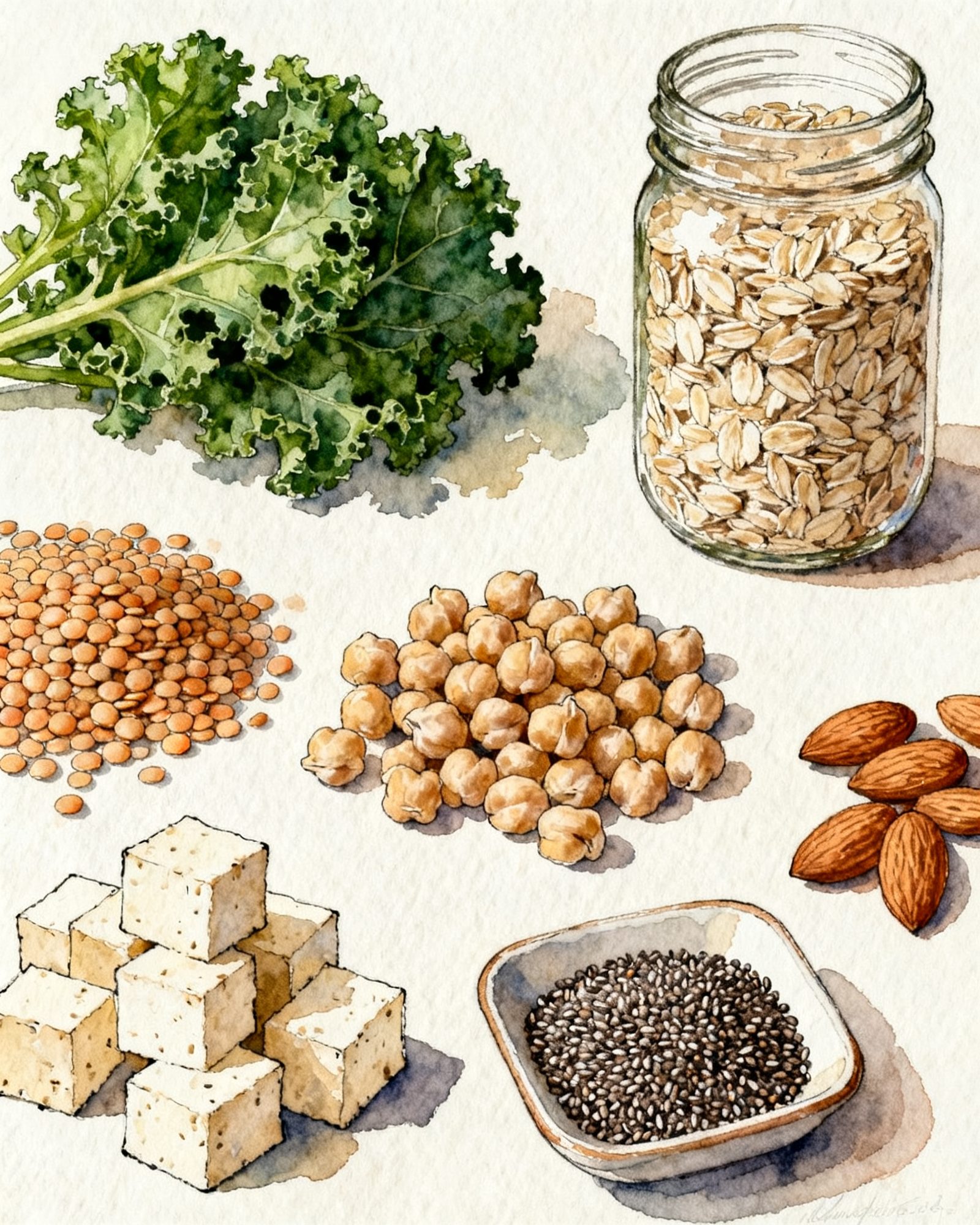
Protein is the nutrient people ask about first when they cut back on meat, and the honest answer has two parts. The amount you need is a number you can work out from your body weight, and the Dietary Guidelines published in January 2026 set a goal well above the current RDA. Where it comes from is the easier part: beans, lentils, soy foods, seeds, nuts and whole grains all carry protein, and eaten in variety, in a diet with enough calories, they supply every essential amino acid. What follows sets out both targets, what each one is for, which plant foods carry the most protein per serving, and how to build ordinary meals that reach the goal.
Two numbers: the RDA and the new guideline goal
There are two official figures, and they answer different questions.
The RDA: set to prevent deficiency
The Scientific Foundation for the Dietary Guidelines for Americans, 2025-2030 states that “the current Recommended Dietary Allowance (RDA) for protein—0.8 grams per kilogram of body weight per day—was established to prevent deficiency based on nitrogen-balance data.” Its stated purpose is preventing deficiency; the same report points to higher intakes for other goals, as the next section shows.
The same report gives the Acceptable Macronutrient Distribution Range (AMDR): “For adults, the AMDR is 10-35% of total energy.” That is a range for the share of daily calories that comes from protein.
The 2025-2030 goal: higher, and adjusted to calories
The Dietary Guidelines for Americans, 2025-2030, the current edition since January 2026, set “Protein serving goals: 1.2-1.6 grams of protein per kilogram of body weight per day, adjusting as needed based on your individual caloric requirements.” The Scientific Foundation explains the reasoning: “higher intakes within the AMDR (e.g., approximately 1.2-1.6 g/kg of body weight) can support maintenance of lean mass and metabolic health.” For people who are physically active, for example with weight training, it recommends aiming for “an upper limit of 1.4-1.6 g/kg of body weight.”
To use either figure, divide your weight in pounds by 2.2 to get kilograms, then multiply by 0.8 for the RDA or by 1.2 to 1.6 for the guideline range. The table below does that arithmetic for a few body weights, rounded to the nearest whole number:
| Body weight | In kilograms | RDA, grams a day (0.8 g per kg) | 2025-2030 goal, grams a day (1.2-1.6 g per kg) |
|---|---|---|---|
| 120 lb | 54 | 44 | 65-87 |
| 140 lb | 64 | 51 | 76-102 |
| 160 lb | 73 | 58 | 87-116 |
| 180 lb | 82 | 65 | 98-131 |
| 200 lb | 91 | 73 | 109-145 |
| 220 lb | 100 | 80 | 120-160 |
Calculated from the RDA and the 2025-2030 goal quoted above; 1 kilogram = 2.2046 pounds.
Two cautions go with the table. The guideline goal is per kilogram of body weight “adjusting as needed based on your individual caloric requirements”, so it is a starting point rather than a prescription. And the table is for working out a general adult figure; for a child, or during pregnancy or breastfeeding, ask a doctor or registered dietitian instead of scaling it. For more on protein targets, see how much protein you need on DataFood.
The number on food labels
The Nutrition Facts label uses a third figure: the FDA’s Daily Value for protein is 50 g. That is a single reference amount used to calculate the %DV on packages, not a personal target.
Amino acids, “complete protein” and why variety does the work
Proteins are built from amino acids, some of which the body cannot make and has to get from food: the essential amino acids (EAAs). Advice to combine rice and beans at the same meal rests on the idea that plant proteins are “incomplete.” The Academy of Nutrition and Dietetics, in its 2025 position paper on vegetarian dietary patterns for adults, puts it this way:
“Although plant-based proteins contain all EAAs required by the body, they generally exhibit lower digestibility and may be low in specific EAAs such as lysine and methionine. However, this is not of concern for most individuals because there is considerable variation in amino acid composition among protein-rich plant foods allowing for adequate consumption of all EAAs over the course of a day in a varied diet that meets energy requirements.”
Two conditions in that sentence matter: a varied diet, and one that meets energy requirements. The reassurance assumes both, so it does not cover a diet that is very low in calories or built on a narrow set of foods. The Dietary Guidelines for Americans, 2025-2030 make the same point in their advice for vegetarians and vegans: “diversify plant protein sources for amino acid balance.” The Scientific Foundation adds that vegans should rely on “varied protein sources such as soy or mycoprotein” and “complementary plant proteins.”
Plant protein is hardly a niche: the Academy notes that “Sixty percent of dietary protein consumed worldwide is derived from plant sources.”
How much protein is in common plant foods
Most amounts below use the serving sizes in the Daily Servings chart that accompanies the 2025-2030 Dietary Guidelines, which lists protein-food servings as “½ cup beans, peas, or lentils; 1 oz nuts or seeds; 2 tbsp nut or seed butter; 3 oz soy,” and whole-grain servings as “½ cup cooked oats, brown rice, barley, quinoa, or buckwheat; 1 slice bread.” Soy milk, which that chart does not list, is shown per cup.
| Food | Amount | Calories | Protein | Fat | Carbs | USDA record |
|---|---|---|---|---|---|---|
| Lentils, boiled | 1/2 cup (99 g) | 115 | 8.9 g | 0.4 g | 20 g | FDC 172421 |
| Chickpeas, boiled | 1/2 cup (82 g) | 134 | 7.3 g | 2.1 g | 22 g | FDC 173757 |
| Black beans, boiled | 1/2 cup (86 g) | 114 | 7.6 g | 0.5 g | 20 g | FDC 173735 |
| Split peas, boiled | 1/2 cup (98 g) | 116 | 8.2 g | 0.4 g | 21 g | FDC 172429 |
| Soybeans (mature), boiled | 1/2 cup (86 g) | 148 | 16 g | 7.7 g | 7.2 g | FDC 174271 |
| Edamame, frozen, prepared | 1/2 cup (78 g) | 94 | 9.2 g | 4.0 g | 6.9 g | FDC 168411 |
| Firm tofu (calcium sulfate) | 3 oz (85 g) | 122 | 15 g | 7.4 g | 2.4 g | FDC 172475 |
| Tempeh | 3 oz (85 g) | 163 | 17 g | 9.2 g | 6.5 g | FDC 174272 |
| Soy milk, unsweetened, fortified | 1 cup (243 g) | 80 | 6.9 g | 3.9 g | 4.2 g | FDC 175215 |
| Peanut butter, smooth | 2 tbsp (32 g) | 191 | 7.1 g | 16 g | 7.1 g | FDC 172470 |
| Almonds | 1 oz (28 g) | 164 | 6.0 g | 14 g | 6.1 g | FDC 170567 |
| Pumpkin seed kernels, roasted | 1 oz (28 g) | 163 | 8.4 g | 14 g | 4.2 g | FDC 170557 |
| Hemp seeds, hulled | 1 oz (28 g) | 157 | 9.0 g | 14 g | 2.5 g | FDC 170148 |
| Quinoa, cooked | 1/2 cup (92 g) | 111 | 4.1 g | 1.8 g | 20 g | FDC 168917 |
| Oatmeal, cooked with water | 1/2 cup (117 g) | 83 | 3.0 g | 1.8 g | 14 g | FDC 173905 |
| Whole-wheat bread | 1 slice (32 g) | 81 | 4.0 g | 1.1 g | 14 g | FDC 172688 |
Calculated from USDA FoodData Central: the nutrient values per 100 g of each record, scaled to the gram weight USDA lists for the amount shown. Brands and varieties differ.
A few patterns stand out in the table:
- Soy foods lead. Firm tofu, tempeh and boiled mature soybeans carry the most protein per serving, with fewer carbohydrates than beans and lentils. Edamame (young soybeans) carries less per half cup, about as much as lentils.
- Hemp and pumpkin seeds are the most protein-dense seeds in the table. An ounce of either carries more protein than an ounce of almonds, for about the same calories.
- Beans, lentils and split peas come with more carbohydrate. Their protein per half cup is moderate, but they are easy to eat in larger portions, and a full cup doubles the figure.
- Nuts and nut butters are protein plus a lot of fat. Peanut butter and almonds add protein, but they carry more than twice as much fat as protein by weight.
- Soy-free is easy to plan. Without soy, lentils, split peas, beans, chickpeas, hemp and pumpkin seeds carry the most in the table; seitan (made from wheat) is another option for anyone who can eat wheat.
- Grains add up. Oats, quinoa and whole-wheat bread carry less per serving, yet three or four servings across a day make a real contribution.
Values vary between brands and cooking methods; the label on a package of tofu or tempeh gives that product’s actual protein.
Building meals that reach the goal
The simplest approach is a protein food at every meal and snack, chosen from different families over the day. Some patterns that work:
- Breakfast: oatmeal cooked in soy milk instead of water, topped with hemp seeds; or a tofu scramble with whole-wheat toast.
- Lunch: a bowl of red lentil soup with a slice of whole-wheat bread, or a grain bowl with chickpeas, quinoa and a tahini dressing.
- Dinner: chickpea ratatouille over whole-wheat pasta, or baked tofu with roasted vegetables and brown rice. Tofu browns and holds its shape far better when it is pressed first; see how to press tofu.
- Snacks: edamame, roasted pumpkin seeds, peanut butter on an apple, or soy milk.
Soy milk is worth a note: the previous edition of the guidelines, the Dietary Guidelines for Americans, 2020-2025, counted fortified soy milk in the dairy group because it is similar to milk “based on nutrient composition,” and it did not count other plant milks there. The current 2025-2030 document does not mention soy milk or other plant milks at all.
Protein powders, bars and meat alternatives
Meat alternatives, protein bars, protein powders and flavored plant-based yogurts can help on busy days, but the Dietary Guidelines for Americans, 2025-2030 advise vegetarians and vegans to “significantly limit highly processed vegan or vegetarian foods that can include added fats, sugars, and salt.” None of them is required to reach the goals above: the table of foods shows how much protein ordinary servings of tofu, tempeh, lentils and seeds carry.
Plant protein powder vs whey
Whey is a milk protein, so whey powders are not vegan. Plant protein powders are usually made from pea, soy, rice or hemp protein, alone or blended. If you use one, compare products on the label rather than the front of the tub: protein per scoop, the scoop size itself, sodium and the Added Sugars line. Many powders are sold as dietary supplements and carry a Supplement Facts panel instead of a Nutrition Facts panel, so the layout differs. A powder stirred into oatmeal or a smoothie adds protein, but not the fiber and minerals that come with a bowl of lentils or a serving of tofu.
Seitan, mycoprotein and other meat alternatives
Seitan is made from wheat gluten, the protein part of wheat flour, which makes it dense, chewy and high in protein, but unsuitable for anyone with celiac disease or a wheat allergy. Mycoprotein, which the Scientific Foundation names alongside soy as a protein source for vegans, is made from a fungus and sold as meat alternatives; some mycoprotein products contain egg, so check the ingredient list if you eat fully vegan. For any packaged alternative, read the Nutrition Facts panel for protein, sodium and the Added Sugars line. Syrups and honey count as added sugars on the label, including in products sold as natural; natural sweeteners compared explains how the label treats them.
The nutrients that travel with protein
Protein is not the only nutrient a plant-based diet needs a plan for. The Dietary Guidelines for Americans, 2025-2030 list broader shortfalls in vegan diets, including vitamin B12, calcium, iron, zinc and protein, and advise: “Monitor nutrient status periodically, especially for iron, vitamin B12, vitamin D, calcium, and iodine.” The Scientific Foundation says nutrient gaps in fully plant-exclusive diets “should be addressed through fortified foods or supplementation.”
Lentils, beans and tofu also appear in the NIH Office of Dietary Supplements’ table of iron sources; iron from plant foods covers how much you need and what affects absorption. Vitamin B12 is a separate matter: the NIH Office of Dietary Supplements notes that plant foods do not naturally contain it, and vitamin B12 for vegans covers fortified foods and supplements.
When to get individual advice
The Academy’s 2025 position paper covers nonpregnant, nonlactating adults, and it describes “appropriately planned” vegan dietary patterns as able to be nutritionally adequate. Planning is the operative word. If you are pregnant or breastfeeding, feeding a child a vegan diet, older, training hard, or managing a medical condition that affects how much protein you should eat, such as kidney disease, ask your doctor or a registered dietitian for a target that fits you rather than relying on a general range.
Common questions
How much protein do I need a day?
The Recommended Dietary Allowance is 0.8 grams of protein per kilogram of body weight per day, a level set to prevent deficiency. The Dietary Guidelines for Americans, 2025-2030 set a higher goal of 1.2-1.6 grams per kilogram, adjusted to your calorie needs. Divide your weight in pounds by 2.2 to get kilograms, then multiply.
Do vegans need to combine proteins at every meal?
No. The Academy of Nutrition and Dietetics says plant proteins contain all the essential amino acids, and that a varied diet that meets energy needs supplies all of them over the course of a day. Its wording is about the whole day in a varied diet, not about matching foods within one meal.
Is tofu a complete protein?
The Academy of Nutrition and Dietetics notes that plant-based proteins contain all the essential amino acids, though plant proteins in general may be low in specific ones such as lysine and methionine. Tofu, tempeh and soybeans are also among the most protein-dense plant foods per serving in USDA data, which is why they anchor many vegan meals.
What plant foods have the most protein?
Per serving, soy foods (tofu, tempeh, soybeans, edamame), hemp and pumpkin seeds, lentils, split peas and beans carry the most, as the table on this page shows. Nuts and nut butters add protein too, with more fat and calories for the same amount of protein.
Is plant protein as good as animal protein?
The Academy of Nutrition and Dietetics says plant proteins contain all the essential amino acids but generally have lower digestibility and may be low in lysine and methionine. It adds that this is not a concern for most people, because protein-rich plant foods vary in their amino acids, so a varied diet that meets energy needs supplies all of them over a day.
Can you get enough protein on a vegan diet?
The Academy of Nutrition and Dietetics says appropriately planned vegan dietary patterns can be nutritionally adequate for adults. The Dietary Guidelines for Americans, 2025-2030 list protein among the shortfalls seen in vegan diets, so planning matters: a protein food at each meal and a variety of sources over the day.
Sources
- Dietary Guidelines for Americans, 2025-2030
- The Scientific Foundation for the Dietary Guidelines for Americans, 2025-2030
- Academy of Nutrition and Dietetics: Vegetarian Dietary Patterns for Adults (2025 position paper)
- Daily Servings by Calorie Level (Dietary Guidelines for Americans, 2025-2030)
- USDA FoodData Central
Read next
Dietary fiber: how much you need and where to get it
Fiber goals from the 2020-2025 Dietary Guidelines, the 25-29 g/day figure in the 2025-2030 science report, how few Americans get enough, and plant fiber foods.
Omega-3s from plant foods: ALA, EPA, DHA and algae
ALA, EPA and DHA explained: adult Adequate Intakes for ALA, the richest plant sources, why conversion is limited, and algal oil as a vegan omega-3 source.
Iron from plant foods: sources, needs and absorption
Iron-rich plant foods, why nonheme iron is absorbed less well, the 1.8 times figure for vegetarians, and how vitamin C and other foods affect uptake.
Vegan bean chili: thick, smoky and made with three beans
Thick vegetarian chili, fully vegan: kidney, black and pinto beans, blooming spices, what thickens it, canned vs. dried beans done safely, toppings, freezing.
Baked BBQ tofu with creamy cauliflower mash
Crispy baked tofu in a homemade barbecue sauce with a creamy dairy-free cauliflower mash: pressing, when the sauce goes on, storage and reheating.