Orange and coconut yogurt parfait
An orange-and-cream coconut yogurt parfait: segmented oranges, vanilla coconut yogurt, granola and coconut whipped cream, layered so the granola stays crisp.
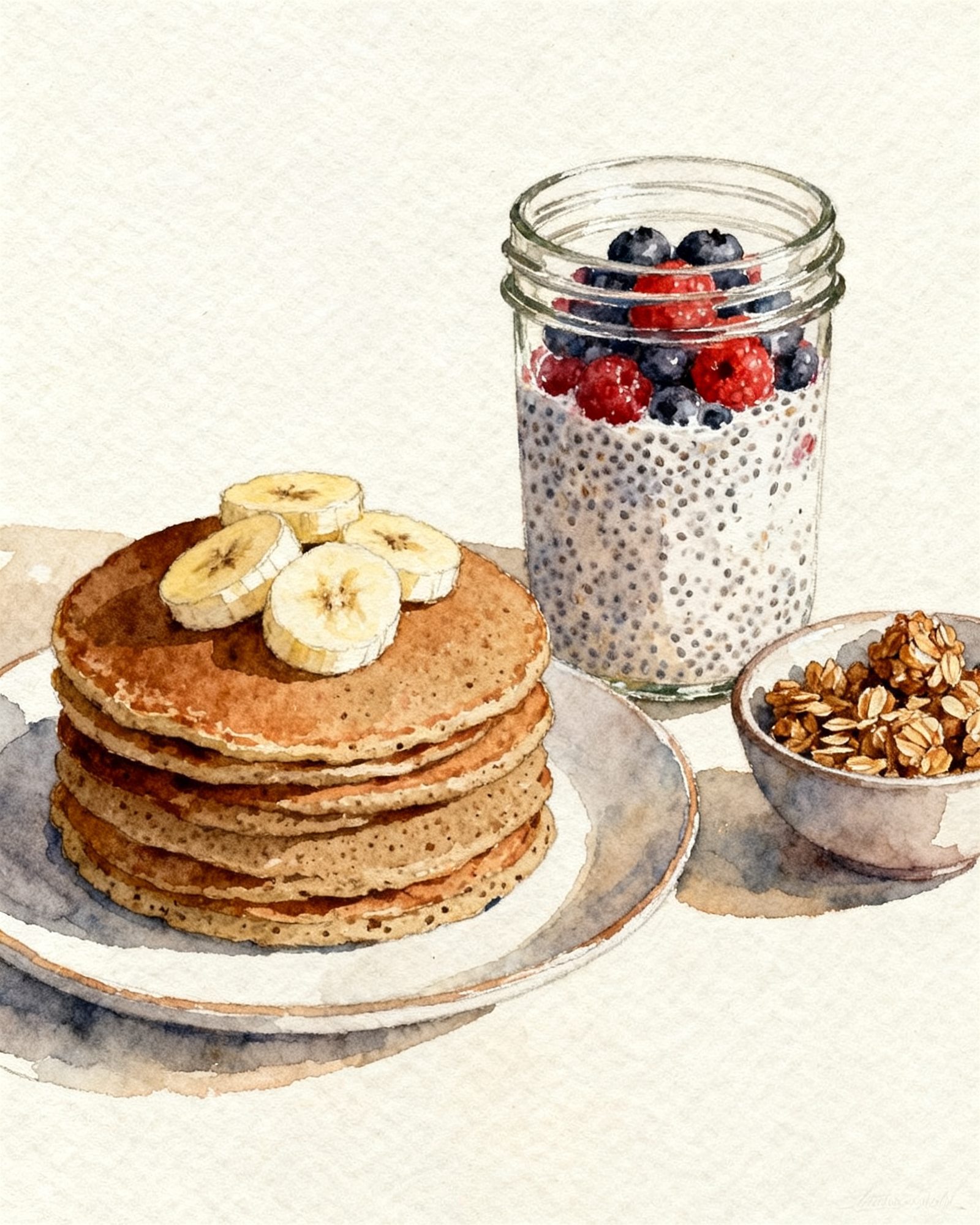
Makes 2 parfaits, 2 servings
Ingredients
- 2 medium (about 260 g) navel oranges
- 1 tsp finely grated orange zest, from one of the oranges (optional)
- 1 1/2 cups (340 g) plain coconut yogurt, as thick as you can find; counted with USDA's only coconut milk yogurt record, which does not say whether it is plain or sweetened (check your label for sugar)
- 2 tsp maple syrup
- 1/2 tsp vanilla extract
- 2/3 cup (73 g) granola, such as maple almond granola
To serve
- 4 tbsp coconut whipped cream (optional)
Equipment
- Cutting board
- Sharp paring knife or chef's knife
- Fine grater (for the zest)
- Fine-mesh sieve set over a bowl
- Small mixing bowl
- Two 16-ounce (1-pint) glasses or jars
Method
Rinse the oranges under running water and pat them dry. If using the zest, finely grate 1 teaspoon from one orange, taking only the orange outer layer and none of the white pith beneath it.
Cut a slice off the top and bottom of each orange so it stands flat. Following the curve of the fruit, cut away the peel and all of the white pith in strips from top to bottom.
Holding a peeled orange over the sieve set in a bowl, cut down along both sides of each membrane to release the segments into the sieve. Squeeze the leftover membranes over the bowl, then let the segments drain while you make the yogurt layer. Keep the juice for drinking; it is not needed here.
In a small bowl, stir the coconut yogurt, maple syrup, vanilla and orange zest (if using) until smooth.
Spoon a quarter of the yogurt into each glass and top with a quarter of the orange segments. Repeat with the remaining yogurt and oranges.
Just before serving, top each parfait with the granola and a spoonful of coconut whipped cream. Serve right away, while the granola is still crisp.
Nutrition per serving
| Calories | 420 |
|---|---|
| Total fat | 14 g |
| Saturated fat | 9 g |
| Carbohydrate | 67 g |
| Fiber | 8 g |
| Total sugars | 40 g |
| Protein | 9 g |
| Sodium | 130 mg |
| Calcium | 320 mg |
| Iron | 2.7 mg |
Per serving, calculated from USDA FoodData Central values for the ingredients and amounts listed, leaving out the optional ingredients. Calories, fat, carbohydrate, fiber, sugars, protein and sodium are rounded with the FDA Nutrition Facts label rules; calcium is shown to the nearest 10 mg and iron to the nearest 0.1 mg. Brands differ, so treat the figures as estimates.
How these numbers were calculated
Each ingredient as weighed for the calculation and the USDA FoodData Central record its nutrients come from. Where USDA has no record for an ingredient (vegan butter, nutritional yeast, coconut sugar), the closest generic record is used and named here.
| Ingredient | Grams | USDA record |
|---|---|---|
| 2 medium (about 260 g) navel oranges | 262 g | FDC 169097: Oranges, raw, all commercial varieties (SR Legacy). Weight from: USDA portion '1 fruit (2-5/8" dia)' |
| 1 tsp finely grated orange zest, from one of the oranges (optional) | not counted (optional) | FDC 169103: Orange peel, raw (SR Legacy). Weight from: USDA portion '1 tsp' |
| 1 1/2 cups (340 g) plain coconut yogurt, as thick as you can find; counted with USDA's only coconut milk yogurt record, which does not say whether it is plain or sweetened (check your label for sugar) | 339 g | FDC 2707569: Yogurt, coconut milk (FNDDS 2021-2023). Weight from: USDA portion '1 cup' |
| 2 tsp maple syrup | 13.1 g | FDC 169661: Syrups, maple (SR Legacy). Weight from: USDA portion '1 cup' (1 cup = 16 tbsp = 48 tsp) |
| 1/2 tsp vanilla extract | 2.1 g | FDC 173471: Vanilla extract (SR Legacy). Weight from: USDA portion '1 tsp' |
| 2/3 cup (73 g) granola, such as maple almond granola | 73.3 g | FDC 2708461: Cereal, granola (FNDDS 2021-2023). Weight from: USDA portion '1 cup' |
| 4 tbsp coconut whipped cream (optional) | not counted (optional) | FDC 170173: Nuts, coconut milk, canned (liquid expressed from grated meat and water) (SR Legacy). Weight from: USDA portion '1 tbsp' |
This parfait takes the flavor of an orange-and-cream ice pop, the kind with a bright orange shell and vanilla ice cream inside, and turns it into a breakfast you eat with a spoon. Juicy orange segments alternate with coconut yogurt stirred with vanilla, a little maple syrup and fresh orange zest, and the glass is finished with crunchy granola and a spoonful of coconut whipped cream. It takes about 15 minutes, most of it spent cutting the oranges, and the only real technique is in the order you add things: wet layers first, crisp layers last.
Why the oranges are segmented
Orange slices or wedges in a parfait bring chewy membrane and bitter white pith, and they release juice that pools at the bottom of the glass. Cutting the fruit into segments, sometimes called supremes, leaves only the tender flesh.
The method on the card is quick once you have done it once:
- Slice off the top and bottom so the orange stands flat.
- Cut the peel and all of the white pith away in strips, following the curve of the fruit.
- Holding the orange over a sieve, slide the knife down along each side of every membrane, and the segments fall out cleanly.
Draining the segments in the sieve while you mix the yogurt matters. The juice that collects would otherwise thin the yogurt and run between the layers. Drink it, or use it in a smoothie.
Rinse the oranges under running water before zesting or peeling them. The FDA does not recommend washing fruits and vegetables with soap, detergent or commercial produce wash. The zest is optional on the card, but it carries much of the orange aroma, so it is worth the extra minute. Grate only the thin orange outer layer; the white pith underneath tastes bitter.
Keeping the granola crisp
Granola is dry and absorbent. Next to yogurt and fruit it starts to soften within minutes and is soggy after an hour or so. That is why the card puts it on top, at the last moment, instead of in the middle layers.
If you like granola all the way through, add a thin layer of it between the yogurt and the oranges only when you are about to eat. To take a parfait to work or school, pack the granola in a small separate container and sprinkle it over just before eating.
Homemade maple almond granola with its large clusters is a good fit here, since clusters stay crunchy longer than loose flakes. The card’s nutrition uses USDA’s generic granola record, so a different granola changes the numbers.
Make-ahead limits
The yogurt and orange layers can be assembled up to the night before. Cover the glasses and keep them in the refrigerator at 40°F or below. The oranges release a little more juice overnight, so the yogurt will be slightly looser in the morning, but it is still good.
Two things should not be done ahead:
- The granola, for the reasons above.
- The coconut whipped cream, which softens and slumps as it sits and can weep liquid into the glass.
An assembled parfait is a perishable food. Do not leave it out at room temperature for more than 2 hours, the limit the USDA Food Safety and Inspection Service sets for perishable foods, or more than 1 hour when the temperature is above 90°F.
Choosing the coconut yogurt
Coconut yogurts vary widely. Some are thick and spoonable, others are almost pourable, and their sugar content ranges from none added to quite sweet. For a parfait, choose a thick, plain one. If yours is vanilla-flavored or sweetened, leave out the maple syrup and the vanilla extract and taste before adding anything. The card’s nutrition is calculated from USDA’s only generic record for coconut milk yogurt, which does not say whether it is plain or sweetened and carries a fair amount of sugars, so with a plain, unsweetened yogurt the parfait likely has less sugar than the card shows; your yogurt’s label is the better guide.
Homemade yogurt works well and can be made as thick as you want; homemade coconut yogurt explains the method and the food-safety steps.
The coconut whipped cream
The whipped topping is made from the thick cream that rises to the top of a chilled can of full-fat coconut milk, whipped until fluffy. It adds the creamy half of the orange-and-cream flavor. It is optional on the card and left out of its nutrition. The full method is in coconut whipped cream. Spoon it on right before serving, because it softens quickly at room temperature.
Building your own parfait
Every good parfait has the same four parts, and once you know what each one does, you can build one from whatever is in the kitchen:
| Layer | Job | Good choices | Watch out for |
|---|---|---|---|
| Creamy base | Holds everything together | Thick plain coconut yogurt, soy yogurt, set chia pudding | Thin yogurt runs to the bottom of the glass |
| Fruit | Freshness, juice, color | Orange segments, diced mango, pineapple, berries, kiwi | Juicy fruit should be drained, or the yogurt thins |
| Crunch | Contrast | Granola, toasted coconut flakes, toasted seeds or nuts | Goes soft within minutes of touching yogurt; add it last |
| Finish | Richness or sweetness | Coconut whipped cream, a drizzle of maple syrup, citrus zest | Whipped cream softens at room temperature |
Layer from wet to dry: yogurt and fruit in alternating layers, crunch and finish on top. In a 16-ounce glass, as on the card, two rounds of yogurt and fruit leave room for the topping.
Toasted coconut instead of granola
Toasted unsweetened coconut flakes add crunch and a deeper coconut flavor that suits this parfait. Toast them in a dry skillet over medium-low heat, stirring constantly, until most of the flakes are golden; they go from golden to burnt quickly, so stay with the pan and tip them onto a plate as soon as they are done. Like granola, they go on at the last moment.
Adding a chia layer
A layer of chia pudding between the yogurt and fruit makes the parfait more filling and adds a different texture. Use pudding that has fully set, not seeds stirred in a few minutes before: chia seeds need time in liquid to soften and expand. The chia pudding recipe gives the ratio and the setting time, and a batch made the night before is ready to layer in the morning.
Swaps and variations
- Other citrus. Cara cara oranges are sweeter and pink inside; blood oranges give a deep red color and a berry-like flavor; clementines or mandarins can be peeled and separated by hand, membrane and all, if you do not mind a little extra chew.
- Mango. Diced ripe mango keeps the tropical, creamy feel and pairs especially well with toasted coconut. Frozen mango chunks work once thawed and drained.
- Pineapple. Fresh diced pineapple, or canned pineapple packed in juice and drained well in a sieve; crushed pineapple is very wet, so press out the juice before layering.
- Other fruit. Berries or sliced kiwi work year-round; thawed frozen berries release a lot of juice, so drain them first.
- Other yogurt. Plain soy yogurt is usually tangier than coconut yogurt and works the same way; it adds soy. Almond and oat yogurts tend to be thinner, so look for a thick one. A Greek-style coconut yogurt, or homemade yogurt strained until thick, gives the neatest layers.
- Without granola. Toasted sliced almonds or toasted coconut flakes give crunch without oats.
- Breakfast for a crowd. Serve the components in bowls and let everyone build their own. Alongside warm vegan buckwheat pancakes, a small parfait makes a full brunch.
Allergy notes
This parfait contains coconut (in the yogurt and the whipped cream). Many granolas, including the maple almond granola linked above, contain tree nuts; use a nut-free granola or toasted seeds if needed. Store-bought coconut yogurts sometimes contain other allergens such as nuts or soy, so check the label.
Granola is usually made with oats. The National Institute of Diabetes and Digestive and Kidney Diseases (NIDDK) notes that cross-contact between oats and grains that contain gluten “is common and can make oats unsafe for people with celiac disease,” so anyone with celiac disease should use a granola made with certified gluten-free oats and check every label for cross-contact.
Common questions
How do you keep granola from getting soggy in a parfait?
Add it at the last moment, on top, rather than layering it between the yogurt. Granola absorbs moisture from yogurt and fruit and softens quickly. For parfaits to take to work, pack the granola in a separate small container and sprinkle it on just before eating.
Can I make yogurt parfaits the night before?
You can layer the yogurt and drained orange segments the night before and keep the glasses covered in the refrigerator at 40°F or below. Add the granola and the coconut whipped cream in the morning. Assembled with granola, a parfait is best eaten right away.
What is the best coconut yogurt for a parfait?
A thick, plain coconut yogurt works best, because thin yogurt runs between the layers. Store-bought coconut yogurts vary a lot in thickness and in how much sugar they contain, so check the label. Homemade coconut yogurt works too and can be made as thick as you like.
What fruit goes best in a coconut yogurt parfait?
Fruit with some acidity balances the rich coconut: oranges, as on the card, pineapple, mango, berries and kiwi all work. Drain juicy or thawed frozen fruit in a sieve first, so its juice does not thin the yogurt and pool at the bottom of the glass.
Can I add chia seeds to a yogurt parfait?
Add them as a layer of chia pudding that has fully set, rather than as dry seeds or seeds stirred in a few minutes before eating. Chia seeds need time in liquid to soften and expand; a batch of chia pudding made the night before is ready to layer in the morning.
Can I use canned mandarin oranges instead of fresh oranges?
Yes. Choose mandarins packed in juice rather than syrup, drain them well in a sieve and pat them dry. They are softer and sweeter than fresh navel orange segments, so you may want to leave out the maple syrup.
Sources
Read next
Maple almond granola with big clusters
Big-cluster homemade granola with maple and almonds: press it flat, bake at 325°F without stirring, cool it untouched. Plus a chocolate version.
Vegan buckwheat pancakes, light and fluffy
Fluffy vegan buckwheat pancakes with no eggs or dairy: how the batter rises, why it rests 10 minutes, when to flip, a banana option, and freezing tips.
Chia pudding: the ratio, the method and five flavors
How to make chia seed pudding that sets thick and smooth: the 1-to-4 ratio of seeds to plant milk, the second stir that stops clumps, flavors and storage.
Plant milks compared: soy, oat, almond, coconut and rice
Plant milk comparison per cup from USDA data: protein, calcium and sugars in soy, oat, almond, coconut and rice milk, fortification, labels and cooking uses.
Natural sweeteners compared: maple, dates, coconut sugar
What maple syrup, agave, coconut sugar, dates, molasses and stevia are, how the FDA and Dietary Guidelines treat them, and how each one behaves in baking.