What is nutritional yeast and how to use it
Nutritional yeast explained: what the flakes are, fortified vs unfortified, how much vitamin B12 the NIH lists, the niacin caution, and how to cook with it.
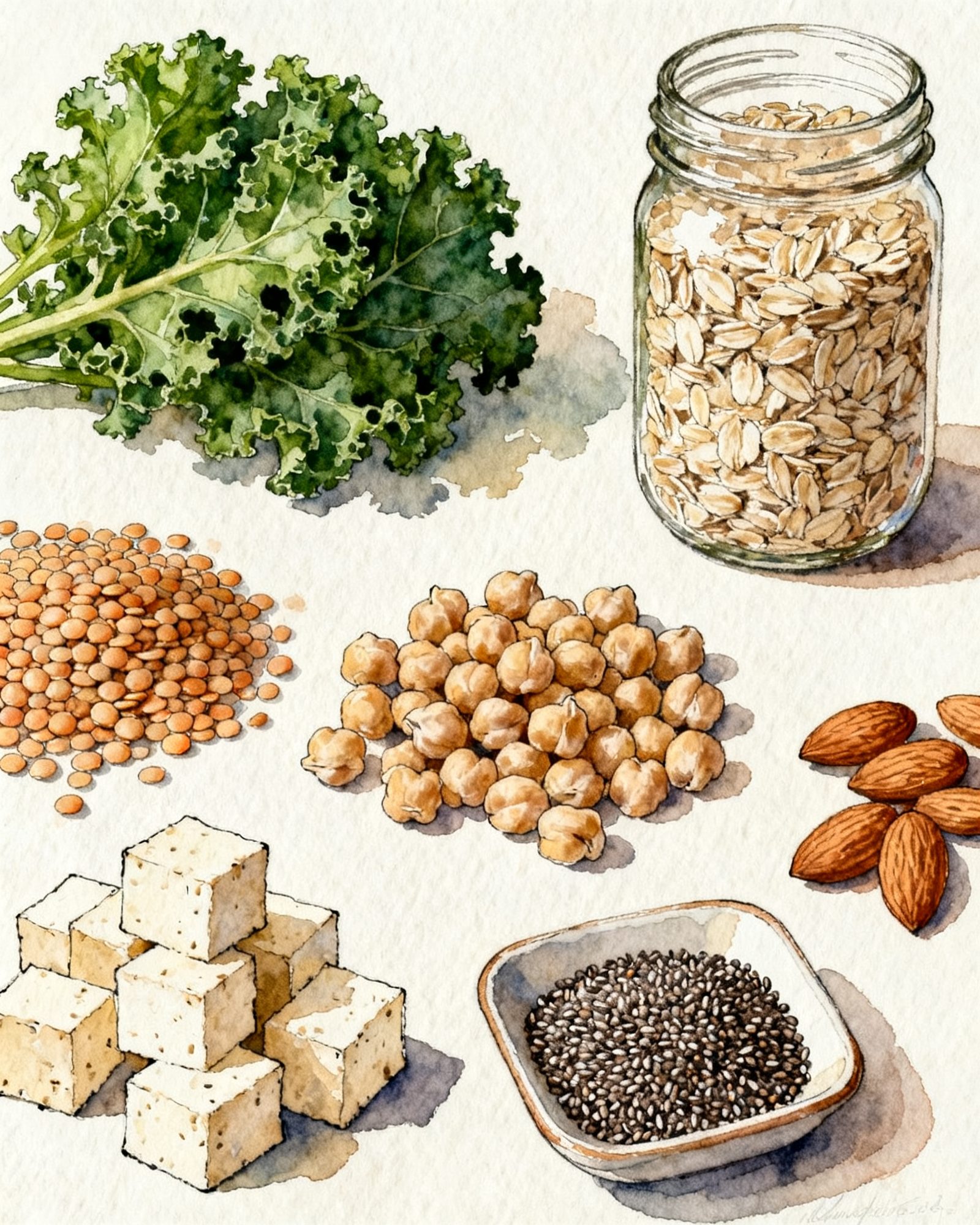
Nutritional yeast is a dried, deactivated yeast sold as yellow flakes or powder, used as a seasoning for its savory, nutty, slightly cheesy flavor. In plant-based cooking it does the job of grated cheese on pasta and popcorn and gives body to sauces and gravies. It also has a reputation as a vitamin B12 source, which is true only for some products. Here is what it is, what the label needs to say, and how to cook with it.
What nutritional yeast is
Harvard Health Publishing describes it plainly: “Nutritional yeast is an inactivated strain of the fungus Saccharomyces cerevisiae.” That is the same species used for baking bread and brewing beer, but the product is made and handled differently. In Harvard’s description, “Processors grow the cells in energy-rich molasses, then de-activate them with heat. The yeast cells die, and release glutamic acid, a savory flavor.” The yeast is then dried into flakes or ground to a powder.
Because the cells are no longer alive, nutritional yeast cannot make dough rise or ferment anything. It is a finished food, ready to eat straight from the container.
Nutritional yeast, brewer’s yeast and baker’s yeast
Three products share a species and are easy to confuse:
| Product | What it is | How it is used |
|---|---|---|
| Nutritional yeast | Yeast grown to be eaten, deactivated with heat and dried | Seasoning: flakes or powder with a savory, cheesy taste |
| Brewer’s yeast | Traditionally a by-product of beer making, deactivated and dried | Mostly sold as a supplement; tastes bitter |
| Baker’s yeast (active dry, instant, fresh) | Live yeast | Leavening bread dough; not a seasoning |
Yeast extract spread, the dark salty paste eaten on toast in some countries, is a further product made from yeast and is not interchangeable with any of the three.
Fortified or unfortified: the label decides
Nutritional yeast comes in two kinds, and they are very different nutritionally.
Unfortified nutritional yeast contains only what the yeast itself provides. According to Harvard Health Publishing, “Unfortified nutritional yeast contains just a few nutrients: One serving (two tablespoons) has 2% of the Daily Value (DV) for potassium and 8% DV for thiamin, as well as 180% DV riboflavin.” The same article adds: “(Unfortified nutritional yeast has no vitamin B12.)”
Fortified nutritional yeast has vitamins added during manufacture, typically several B vitamins including B12. Harvard notes that “most nutritional yeast found in grocery stores is fortified,” but “most” is not “all”: the ingredient list names any added vitamins, and the Nutrition Facts panel shows how much of each a serving provides.
USDA FoodData Central, the government food composition database, has no generic record for nutritional yeast in the datasets used on this site, so there is no single reference figure for its calories, protein or fiber either. The label of the product you buy is the number to use.
Reading a nutritional yeast label
Because products differ so much, a minute with the Nutrition Facts panel tells you more than any general figure:
- Serving size. Labels state a serving by volume and weight. Compare it with what you actually use: a sprinkle is often less than one serving, a cheese sauce for four often several.
- Vitamin B12. Look for it in the ingredient list, where added B12 often appears as cyanocobalamin, and on the panel. If no B12 is listed among the ingredients, the product is unfortified, and unfortified nutritional yeast has no vitamin B12.
- Other added vitamins. Fortified products often list niacin, folic acid and other B vitamins. If you take a multivitamin or a B-complex as well, add the amounts up, and ask a doctor or pharmacist if you are unsure.
- Percent Daily Value. The FDA’s rule of thumb is that “5% DV or less of a nutrient per serving is considered low” and “20% DV or more of a nutrient per serving is considered high.”
- Sodium and added ingredients. Plain nutritional yeast is usually just yeast plus any added vitamins; seasoned blends can add salt or other flavorings, so check the ingredient list if you are watching sodium.
Calories and protein are on the panel too, and they also vary from product to product.
Vitamin B12 in nutritional yeast
The NIH Office of Dietary Supplements (ODS) states that “Plant foods do not naturally contain vitamin B12. However, fortified breakfast cereals and fortified nutritional yeasts are readily available sources of vitamin B12 that have high bioavailability.” The ODS also notes that eating foods fortified with vitamin B12, “such as fortified nutritional yeasts,” along with B12 supplements, “can substantially reduce the risk of deficiency.”
How much B12 a serving holds depends entirely on the brand. The ODS food table lists “Nutritional yeast, fortified, from several brands (check label), about ¼ cup” at 8.3 to 24 mcg per serving, which is 346 to 1,000 percent of the Daily Value. For comparison, the ODS lists a Recommended Dietary Allowance for adults of 2.4 mcg a day (2.6 mcg in pregnancy, 2.8 mcg during lactation), and the Daily Value on labels is also 2.4 mcg for adults and children age 4 years and older.
Two cautions follow from that range. First, a quarter cup is a generous amount; a sprinkle over a bowl of pasta is closer to a tablespoon or two, so check the serving size on the label against what you actually use. Second, the range is so wide that the same spoonful can mean very different amounts in different brands. The registered dietitian Nancy Oliveira, quoted by Harvard Health Publishing, advises against eating nutritional yeast to raise B12, because “products contain such variable levels”; for that purpose she points to a B12 supplement or “your doctor’s guidance to treat an actual deficiency.”
For how much B12 you need, the other fortified foods that supply it and how absorption works, see the full guide to vitamin B12 for vegans. If you suspect a deficiency, or you are pregnant or breastfeeding, talk to your doctor or a registered dietitian rather than relying on a seasoning. The same goes for anyone on a medically restricted diet, for example for a digestive condition, gout or kidney disease, or with diet instructions that came with a medicine: ask your doctor, dietitian or pharmacist whether nutritional yeast fits.
A note on niacin
Some fortified nutritional yeasts also carry large amounts of niacin (vitamin B3). Harvard Health Publishing points out that “the tolerable upper limit (UL) for niacin is 35 milligrams per day for adults. Some brands of nutritional yeast contain that amount, or much more, in a 2-tablespoon serving.” This is not a reason to avoid the product, but it is a reason to read the niacin line on the label, especially if you eat several spoonfuls a day or also take a supplement that contains niacin; a doctor or pharmacist can help you check the total.
How nutritional yeast tastes and how to use it
The flavor is savory first, then nutty, with a cheesy note. Flakes are best for sprinkling, because they keep their shape; powder disappears into liquids more smoothly. Either works in sauces. Powder packs more densely than flakes, so when a recipe written for flakes is made with powder, start with about half the amount and add more to taste.
Is it the same as MSG?
No. The savory taste comes from the glutamic acid the yeast cells release during processing, as Harvard Health Publishing describes. Monosodium glutamate (MSG) is a purified sodium salt of that same acid, added as a separate ingredient. Both give a savory, glutamate taste, but nutritional yeast is a whole dried yeast with flavors and nutrients of its own, not an MSG product.
Sprinkled on
- Popcorn. Toss freshly popped corn with a little melted vegan butter or oil first, then with nutritional yeast and fine salt; the fat is what makes the flakes stick.
- Pasta. Use it like grated parmesan over tomato or garlic-and-oil pasta.
- Roasted vegetables and potatoes. Sprinkle it on in the last few minutes of roasting or straight after, so it toasts lightly without scorching.
- Pizza. Many cashew-based cheeses use nutritional yeast for savory depth; the cashew mozzarella on the vegan margherita pizza takes an optional tablespoon, and a light dusting over the finished pizza works the way grated cheese would.
Cooked in
- Cheese-style sauces. Blended with soaked cashews, a little acid, garlic and spices, it gives a sauce its cheesy character; cashew queso is the classic example. It also thickens slightly as it heats.
- Tofu scramble. A spoonful or two adds the savory depth that crumbled tofu lacks on its own; tofu scramble pairs it with turmeric for color.
- Gravies, soups and stews. Stir it in near the end for a rounder, more savory flavor.
- Vegan parmesan. Pulse raw cashews or almonds with nutritional yeast, a pinch of fine salt and a little garlic powder until it looks like coarse crumbs. Pulse briefly: running the processor too long turns the nuts into butter.
How much to use
Start with about 1 tablespoon per serving of pasta or vegetables and 2 to 4 tablespoons in a sauce for four, then adjust. Too much tips the flavor from cheesy to bitter and yeasty, and it thickens sauces noticeably, so add liquid if a sauce turns pasty.
Substitutes when you run out
What to use depends on what the nutritional yeast was doing in the recipe:
| Its job in the recipe | Substitute | What changes |
|---|---|---|
| Cheesy sprinkle on pasta, popcorn or vegetables | Vegan parmesan (ground cashews or almonds with salt and garlic powder), or grated dairy parmesan if you eat dairy | Nuttier and richer; contains tree nuts (or dairy) |
| Savory depth in sauces, gravies and soups | About 1 teaspoon of white miso per tablespoon of nutritional yeast, whisked in off the boil | Saltier, so cut back other salt; contains soy |
| Cheese flavor in a cashew sauce | A little extra salt, garlic powder and lemon juice, plus a pinch of dry mustard | Less savory and less cheesy, but still a good sauce |
| Savory note in tofu scramble | A splash of soy sauce or a pinch of black salt (kala namak) | Different flavor; soy sauce usually contains wheat |
| A tiny savory boost in a stew | A small amount of yeast extract spread, dissolved in hot liquid | Very salty and strong; use far less than nutritional yeast |
Two things do not work. Baker’s yeast is live yeast for leavening dough, not a seasoning. Brewer’s yeast is closer, but it tastes bitter and is mostly sold as a supplement. In many recipes the simplest substitute is none: leave it out and season a little more boldly with salt and acid.
Storing it
Nutritional yeast is a dry food and keeps at room temperature. Store it in its sealed bag or an airtight jar in a cool, dark, dry cupboard. Moisture makes it clump, so close the bag or jar tightly after each use and scoop it with a dry spoon. Go by the date printed on the package. There is no need to refrigerate or freeze it; cold containers taken out into a warm kitchen can collect condensation, which is the moisture that makes it clump.
Allergy and gluten notes
Nutritional yeast is a yeast, so anyone told to avoid yeast should avoid it too. It is not a dairy product, and it is not made from nuts or soy, although recipes that use it often contain them (cashew sauces, tofu scramble); the package’s allergen statement tells you how a product was made. If you need to avoid gluten, look for a product labeled gluten-free and check the label for cross-contact. The NIDDK notes that foods labeled “gluten-free” “must contain less than 20 parts per million of gluten,” and that cross-contact “can occur at any time, including when foods are grown, processed, stored, prepared, or served.”
For the sweet side of the pantry, explained the same way, see natural sweeteners compared.
Common questions
What does nutritional yeast taste like?
It tastes savory, nutty and a little cheesy, with a toasted note. The savory side comes from glutamic acid, which the yeast cells release when they are heated and die during processing. That is why it is so often used where grated cheese would go.
Is nutritional yeast the same as brewer's yeast?
No. Both are usually strains of Saccharomyces cerevisiae, but brewer's yeast is traditionally a by-product of beer making and tastes bitter, and it is mostly sold as a supplement. Nutritional yeast is grown to be eaten as a food and has a mild, savory flavor. Neither one can leaven bread.
Does nutritional yeast have vitamin B12?
Only if it is fortified. Harvard Health Publishing notes that unfortified nutritional yeast has no vitamin B12. The NIH Office of Dietary Supplements lists 8.3 to 24 mcg per roughly 1/4 cup for fortified brands, so check the Nutrition Facts label of the product you buy.
How much nutritional yeast can I eat a day?
There is no official limit for nutritional yeast itself, but the niacin in fortified products deserves a look. Harvard Health Publishing notes that the tolerable upper limit for niacin is 35 milligrams per day for adults, and that some brands contain that amount, or much more, in a 2-tablespoon serving. Check the niacin line on the label.
What can I use instead of nutritional yeast?
It depends on the job. For a sprinkle over pasta or popcorn, use a vegan parmesan made from ground nuts and salt, or simply salt and a little garlic powder. In sauces and gravies, a teaspoon of white miso adds a similar savory depth. Do not swap in baker's yeast, which is live and meant for dough, or brewer's yeast, which tastes bitter.
Do I need to refrigerate nutritional yeast?
No. It is a dry, shelf-stable food. Keep it tightly sealed in a cool, dark, dry cupboard so it does not absorb moisture and clump, and use it by the date on the package.
Sources
Read next
Natural sweeteners compared: maple, dates, coconut sugar
What maple syrup, agave, coconut sugar, dates, molasses and stevia are, how the FDA and Dietary Guidelines treat them, and how each one behaves in baking.
Chickpea ratatouille: a one-pot vegetable stew made hearty
Stovetop chickpea ratatouille: eggplant and zucchini browned in stages so nothing turns to mush, then simmered with peppers, tomatoes and chickpeas.
Vegan bean chili: thick, smoky and made with three beans
A thick vegan chili with kidney, black and pinto beans: blooming the spices, what thickens it, canned vs. dried beans done safely, toppings and freezing.
Baked BBQ tofu with creamy cauliflower mash
Crispy baked BBQ tofu with a homemade barbecue sauce and a creamy dairy-free cauliflower mash: pressing, when the sauce goes on, storage and reheating.
Vegan margherita pizza with melting cashew mozzarella
A home-oven vegan margherita pizza: an easy yeast dough, a thick quick tomato sauce, a cashew mozzarella that melts and browns, and how to avoid a soggy center.