Crispy baked oven fries with homemade ketchup
Crispy baked oven fries: soaking and drying the potatoes, oven heat and pan setup, turning once, a sweet potato variation and a quick homemade ketchup.
Makes 4 servings of fries, with about 2/3 cup of ketchup
Ingredients
For the fries
- 2 lb (905 g) russet potatoes, about 4 medium, scrubbed, skins on
- 2 tbsp olive oil
- 3/4 tsp fine salt
- 1/2 tsp garlic powder
For the ketchup
- 1 cup (250 g) canned tomato puree, unsalted
- 2 tbsp apple cider vinegar
- 2 tbsp maple syrup
- 1/4 tsp onion powder
- 1/4 tsp garlic powder
- 1/4 tsp smoked paprika
- 1/4 tsp fine salt
Equipment
- Large sharp knife and cutting board
- Large bowl
- Colander and clean kitchen towels
- Two rimmed baking sheets and parchment paper
- Small saucepan
Method
Cut any green patches or sprouts out of the potatoes. Cut each potato lengthwise into slabs about 3/8 inch thick, then cut the slabs into sticks of the same width, so all the fries are the same size.
Put the potato sticks in a large bowl, cover with cold water and soak for 30 minutes, until the water turns cloudy with starch. (Short of time, rinse them in a colander under cold running water until it runs clear instead.)
While the potatoes soak, make the ketchup: in a small saucepan, stir together the tomato puree, apple cider vinegar, maple syrup, onion powder, 1/4 tsp garlic powder, smoked paprika and 1/4 tsp salt. Bring to a simmer over medium-low heat and cook, stirring often and more frequently as it thickens, for 15 to 20 minutes, until reduced to about half and thick enough to hold its shape on a spoon. Let it cool; it thickens further as it cools.
Heat the oven to 425°F (220°C), or 400°F (200°C) if you use the convection (fan) setting, with racks in the upper and lower thirds, and line two rimmed baking sheets with parchment paper.
Drain the potatoes, then spread them on clean kitchen towels and pat them completely dry, top and bottom. Any water left on them turns to steam in the oven and stops them crisping.
Wipe out the bowl, add the dry potatoes and toss them with the olive oil, 3/4 tsp salt and 1/2 tsp garlic powder until every fry is lightly coated.
Spread the fries over the two baking sheets in a single layer, with space between them. Bake for 20 minutes, until the undersides are golden and the fries release easily from the parchment.
Turn the fries with a spatula, swap the baking sheets between the racks, and bake for 10 to 15 minutes more, until golden brown and crisp outside and tender all the way through when pierced with a knife.
Serve the fries hot, with the homemade ketchup for dipping.
Nutrition per serving
| Calories | 290 |
|---|---|
| Total fat | 7 g |
| Saturated fat | 1 g |
| Carbohydrate | 54 g |
| Fiber | 4 g |
| Total sugars | 11 g |
| Protein | 6 g |
| Sodium | 610 mg |
| Calcium | 50 mg |
| Iron | 3.2 mg |
Per serving, calculated from USDA FoodData Central values for the ingredients and amounts listed. Calories, fat, carbohydrate, fiber, sugars, protein and sodium are rounded with the FDA Nutrition Facts label rules; calcium is shown to the nearest 10 mg and iron to the nearest 0.1 mg. Brands differ, so treat the figures as estimates.
How these numbers were calculated
Each ingredient as weighed for the calculation and the USDA FoodData Central record its nutrients come from. Where USDA has no record for an ingredient (vegan butter, nutritional yeast, coconut sugar), the closest generic record is used and named here.
| Ingredient | Grams | USDA record |
|---|---|---|
| 2 lb (905 g) russet potatoes, about 4 medium, scrubbed, skins on | 907.2 g | FDC 170027: Potatoes, russet, flesh and skin, raw (Includes foods for USDA's Food Distribution Program) (SR Legacy). Weight from: 1 lb = 453.6 g |
| 2 tbsp olive oil | 27 g | FDC 171413: Oil, olive, salad or cooking (SR Legacy). Weight from: USDA portion '1 tablespoon' |
| 3/4 tsp fine salt | 4.5 g | FDC 173468: Salt, table (SR Legacy). Weight from: USDA portion '1 tsp' |
| 1/2 tsp garlic powder | 1.6 g | FDC 171325: Spices, garlic powder (SR Legacy). Weight from: USDA portion '1 tsp' |
| 1 cup (250 g) canned tomato puree, unsalted | 250 g | FDC 170460: Tomato products, canned, puree, without salt added (SR Legacy). Weight from: USDA portion '1 cup' |
| 2 tbsp apple cider vinegar | 29.8 g | FDC 173469: Vinegar, cider (SR Legacy). Weight from: USDA portion '1 tbsp' |
| 2 tbsp maple syrup | 40 g | FDC 169661: Syrups, maple (SR Legacy). Weight from: USDA portion '1 tbsp' |
| 1/4 tsp onion powder | 0.6 g | FDC 171327: Spices, onion powder (SR Legacy). Weight from: USDA portion '1 tsp' |
| 1/4 tsp garlic powder | 0.8 g | FDC 171325: Spices, garlic powder (SR Legacy). Weight from: USDA portion '1 tsp' |
| 1/4 tsp smoked paprika | 0.6 g | FDC 171329: Spices, paprika (SR Legacy). Weight from: USDA portion '1 tsp' |
| 1/4 tsp fine salt | 1.5 g | FDC 173468: Salt, table (SR Legacy). Weight from: USDA portion '1 tsp' |
Oven fries are potato sticks tossed in a little olive oil and baked on a hot sheet pan until they are golden and crisp outside and fluffy inside. They get close to deep-fried fries with a fraction of the oil and none of the pot of hot fat, and they come out well once three things are right: the potatoes are cut evenly, their surface starch is rinsed off and they are bone dry before they go in, and they have room on the pan. A quick homemade ketchup, simmered from tomato puree while the potatoes soak, goes alongside.
Why the potatoes are soaked, rinsed and dried
Cutting a potato breaks open cells on every cut face and releases starch. Left on the surface, that starch makes the fries stick together and to the parchment, and it browns in patches before the inside is cooked. Thirty minutes in cold water draws it off: you will see the water turn cloudy. If you are short of time, rinse the cut sticks in a colander under cold running water until it runs clear. It is not quite as thorough, but it helps.
Then comes the step that matters most: drying. Spread the potatoes on clean kitchen towels and pat them dry on every side. Water on the surface has to boil off before browning can start, so wet fries spend their first minutes in the oven steaming, and they come out pale and limp. Dry fries start crisping almost at once.
Cut them evenly
Fries of different sizes cook at different speeds, so a mixed pan ends up with some burnt and some underdone. Cut each potato lengthwise into slabs about 3/8 inch thick, stack a few slabs, and cut them into sticks of the same width. Leave the skins on: they add flavor and crisp well, and they save time. Scrub the potatoes well first and cut away any green patches or sprouts, which taste bitter.
Oven heat and pan setup
A hot oven, 425°F (220°C), crisps the outside before the inside dries out. The pan setup is just as important as the temperature:
- Two baking sheets, not one. Two pounds of potatoes crowded onto a single sheet trap their own steam. Spread them over two sheets with a little space around each fry.
- Parchment paper. It keeps the fries from sticking without extra oil. A bare, lightly oiled pan browns them slightly more, but more of them stick.
- Racks in the upper and lower thirds. Swapping the sheets when you turn the fries evens out the hot spots that most home ovens have.
- Oil, lightly. Two tablespoons is enough to coat this amount. Toss the fries in a bowl so every side gets a thin film, rather than drizzling oil over them on the pan.
Turning once, at the right moment
Leave the fries alone for the first 20 minutes. In that time the undersides form a golden crust and release from the parchment on their own. Turn them too early and that crust tears off and stays on the paper. After the turn and the swap, they need 10 to 15 minutes more, until they are deep golden and a knife slides easily into the thickest one. Thinner fries finish sooner, so check the pan a few minutes early the first time you make them.
Choosing the oven temperature
The card uses 425°F (220°C) because at that heat the outside of a 3/8-inch fry turns golden in about the time the inside takes to turn fluffy. You will find recipes that bake anywhere from a moderate oven to a very hot one, and the trade-off is always the same:
| Oven | What happens to 3/8-inch fries |
|---|---|
| Cooler than the card | They take longer, dry out inside before they brown, and come out leathery rather than crisp. |
| 425°F (220°C), as on the card | Golden, crisp outside and tender inside, with one turn. |
| Hotter than the card | Faster browning, but the thin ends and corners can scorch before the centers are cooked, especially on dark pans. |
| Convection (fan) setting | The moving air browns faster, so use 400°F (200°C) and start checking a few minutes early. |
Whatever the setting, wait until the oven is fully preheated before the fries go in; a cold start steams them.
Other methods you will see, and what they change
- Cornstarch dusting. Tossing the dried fries with about 1 tablespoon of cornstarch before the oil gives a thin, extra-crisp shell. Dust it on evenly and shake off the excess, or it leaves pale, chalky patches.
- Parboiling instead of soaking. Some recipes simmer the cut fries, starting in cold water, until a knife meets only slight resistance, then drain them and let them steam dry. The interior turns fluffier and the edges rougher and crunchier, but the fries are fragile and break easily when you spread them out. It also adds a pot to wash.
- Baking soda in the parboiling water. A small pinch makes the surface of the potato break down slightly more, which gives a craggier crust. Too much leaves a soapy taste.
- Hot water instead of cold. Some recipes soak the fries in hot tap water for a shorter time. Either way the point is to rinse off surface starch; the cold soak on the card is simply the more forgiving one.
- Oil heated on the pan first. Heating the oil on a bare sheet before adding the fries starts the crust faster, but the fries stick more, and hot oil spatters. Parchment is easier.
- No oil at all. Fries baked dry brown poorly and turn tough and leathery. The 2 tablespoons on the card is a thin film over two pounds of potatoes and is what lets them crisp.
- Air fryer. The same cut, soak and dry steps work. Cook in small batches in a single layer, shaking the basket once or twice, because a full basket steams the same way a crowded sheet does.
- Store-bought frozen fries. These are usually pre-cooked before freezing and are made to bake straight from frozen; follow the package directions rather than this method.
Getting ahead
You can cut the potatoes the day before and keep them covered with cold water in the refrigerator; that doubles as the soak. Drain and dry them thoroughly before oiling. The ketchup can also be made a day or two ahead and kept refrigerated.
The homemade ketchup
Ketchup is essentially tomato cooked down with vinegar, sugar and spices. Here, unsalted tomato puree is simmered with apple cider vinegar, maple syrup, onion powder, garlic powder, smoked paprika and salt for 15 to 20 minutes, until it has reduced to about half and is thick enough to hold its shape on a spoon. It splutters as it thickens, so lower the heat and stir more often toward the end. It firms up further as it cools, which is why it is made first, while the potatoes soak.
Taste it once it is cool and adjust: more vinegar for tang, more maple syrup for sweetness, a pinch of cayenne for heat. Maple syrup can be swapped for brown sugar, or for another liquid sweetener such as agave syrup, in the same amount; each changes the flavor slightly, and the guide to natural sweeteners explains how they differ. Without any sweetener it becomes a sharp, tomato-sauce-like dip rather than a ketchup.
Variations
Sweet potato fries
Sweet potatoes make good oven fries with a few changes. Cut them the same way; there is no need to soak them, but dry them if you rinse them. They contain more sugar than russets, so they brown faster and can scorch at the tips, and their moist flesh stays soft rather than turning crunchy. Bake them on the same setup and start checking a few minutes before the russet times. Some cooks toss them with a spoonful of cornstarch along with the oil for a drier, crisper surface.
Other potatoes and seasonings
- Yukon Gold potatoes give a creamier, denser fry. Waxy red potatoes stay firm and crisp less.
- Wedges: cut each potato lengthwise into eighths. Thicker pieces take longer; turn them when the cut sides are golden.
- Seasoning: swap the garlic powder for smoked paprika, a little chili powder, or chopped rosemary added for the last few minutes of baking so it does not burn.
Why not yuca fries
Yuca (cassava) fries are a popular alternative to potato fries. Food Standards Australia New Zealand explains that cassava contains cyanogenic glycosides, which can release hydrogen cyanide, that cassava sold there must be labeled to say it must be fully peeled and cooked, and that cooking methods such as boiling, steaming, baking or frying remove between 10 and 75% of them, none reliably enough on its own. Because a home recipe cannot guarantee that, this recipe uses potatoes.
Common mistakes and how to fix them
- Soggy fries: the potatoes were wet or the pan was crowded. Dry them well and use two sheets.
- Fries stuck to the pan: they were turned too early, or the starch was not rinsed off. Wait for the full 20 minutes before turning.
- Burnt edges, raw centers: the fries were cut unevenly, or too thick for the time. Cut them to one size.
- Pale fries: the oven was not fully heated, or there was too little oil. Let the oven preheat completely and coat every fry.
- Bland fries: salt sticks best when the fries are oiled. Taste one hot from the oven and add a pinch more salt if you like.
Storing and reheating
Oven fries are best straight from the oven, but leftovers keep. Refrigerate fries and ketchup within 2 hours, in covered containers at 40°F or below. USDA’s Food Safety and Inspection Service gives 3 to 4 days in the refrigerator for leftovers; use the same limit for the homemade ketchup. Reheat the fries on a baking sheet in a hot oven until they sizzle and reach 165°F. Cooked fries can also be frozen; FSIS says frozen leftovers keep 3 to 4 months for best quality, though reheated frozen fries are softer than fresh ones.
Allergy and ingredient notes
As written, the recipe contains none of the common allergens: no tree nuts, peanuts, soy, wheat, sesame or coconut. Check the labels of the tomato puree and spices if you need to avoid an allergen that may be handled in the same facility.
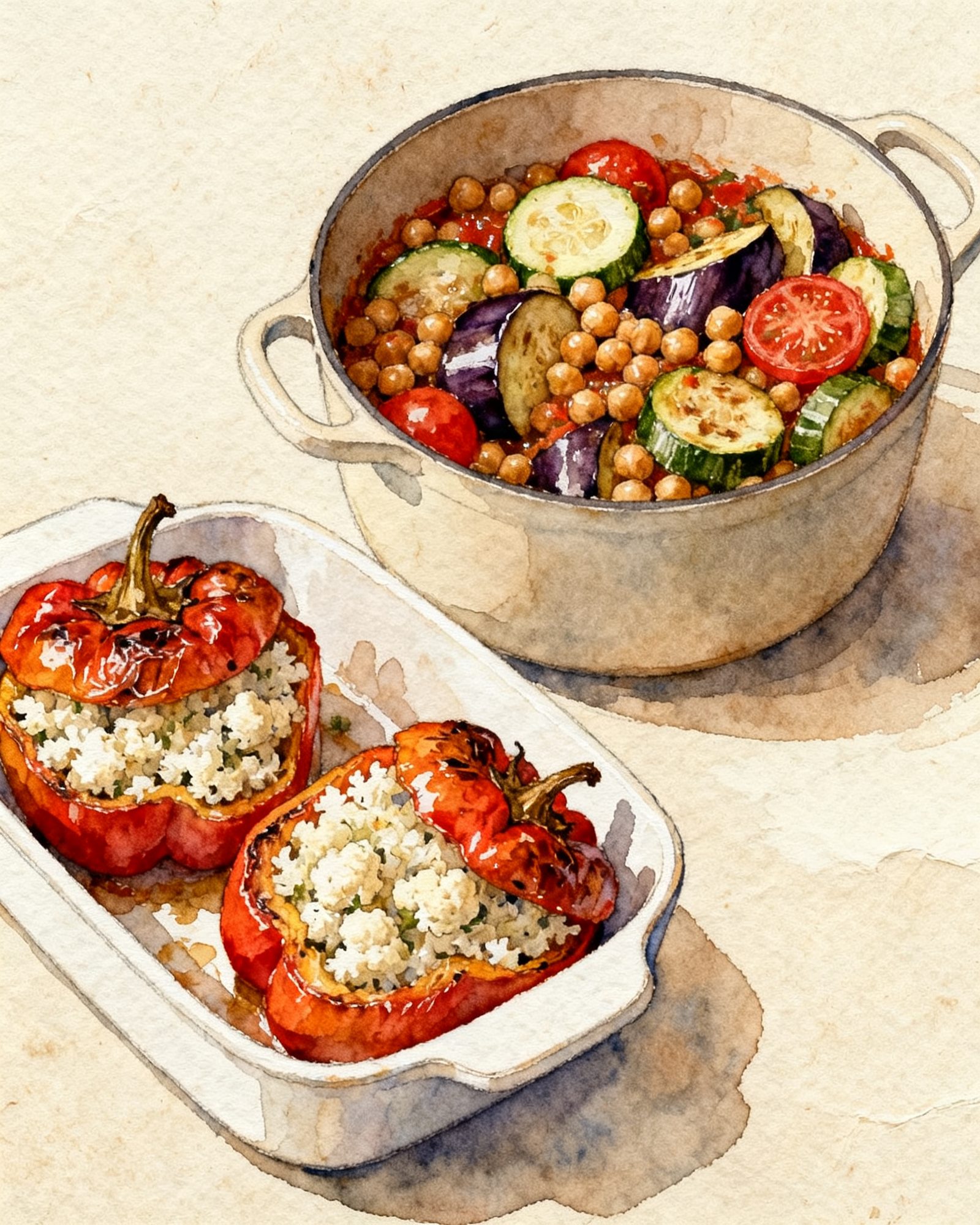
Oven fries go with almost anything. Serve them beside a bowl of chickpea ratatouille, or with baked BBQ tofu in place of its cauliflower mash.
Common questions
Why do you soak potatoes before baking fries?
Soaking cut potatoes in cold water rinses off the starch released on their cut surfaces. That loose starch makes fries stick to each other and to the pan, and it browns unevenly. A soak of about 30 minutes, or a thorough rinse if you are short of time, gives fries that separate cleanly and crisp evenly.
How do I get oven fries crispy instead of soggy?
Dry the potatoes completely after soaking, coat them lightly in oil, and spread them in a single layer with space around each fry, using two baking sheets for this amount. A hot oven at 425°F (220°C) and one turn halfway through do the rest.
What temperature should I bake oven fries at?
425°F (220°C) gives fries about 3/8 inch thick a crisp, golden outside and a fluffy inside in the time on the card. A cooler oven dries them out before they brown, and a hotter one can scorch the thin ends. With the convection setting, use 400°F (200°C) and start checking a few minutes early.
What are the best potatoes for oven fries?
Russet potatoes, which are starchy and dry, give the classic fry with a crisp outside and a fluffy inside. Yukon Gold potatoes give a creamier, denser fry with a slightly buttery taste. Waxy red potatoes hold their shape but stay firmer and crisp less.
Can I make oven fries with sweet potatoes?
Yes. Cut them the same way and skip the soak, then bake them on the same setup. Sweet potatoes contain more sugar, so they brown faster and stay softer than russets; start checking them a few minutes early and expect a tender rather than crunchy fry.
How do I reheat leftover fries?
Spread them on a baking sheet and reheat them in a hot oven until they sizzle and reach 165°F, the reheating temperature USDA gives for leftovers. A microwave heats them through but leaves them soft.
Sources
Read next
Baked BBQ tofu with creamy cauliflower mash
Crispy baked tofu in a homemade barbecue sauce with a creamy dairy-free cauliflower mash: pressing, when the sauce goes on, storage and reheating.
Spaghetti with baked lentil-walnut vegan meatballs
Baked lentil-walnut vegan meatballs that hold together, in a simple garlic marinara with spaghetti: the binder, chilling before shaping, baking and freezing.
Red lentil soup with cumin, carrot and lemon
An easy red lentil soup recipe with onion, carrot, tomato and cumin: why red lentils need no soaking and turn creamy, thickness, lemon and freezing.
How to make cauliflower rice that is fluffy, not mushy
How to make cauliflower rice with a box grater or food processor, cook it dry in a skillet or roast it, season it, freeze it and avoid mushy, watery rice.
Homemade peanut butter cups, dairy-free
Homemade peanut butter cups in a muffin tin: melting dairy-free chocolate gently, a filling that holds its shape, layering, setting and peanut butter eggs.