Oatmeal coconut cookies, chewy and made without eggs
Chewy oatmeal cookies with coconut, made vegan with a flax egg: which oats to use, why the dough chills, controlling spread and telling when they are done.
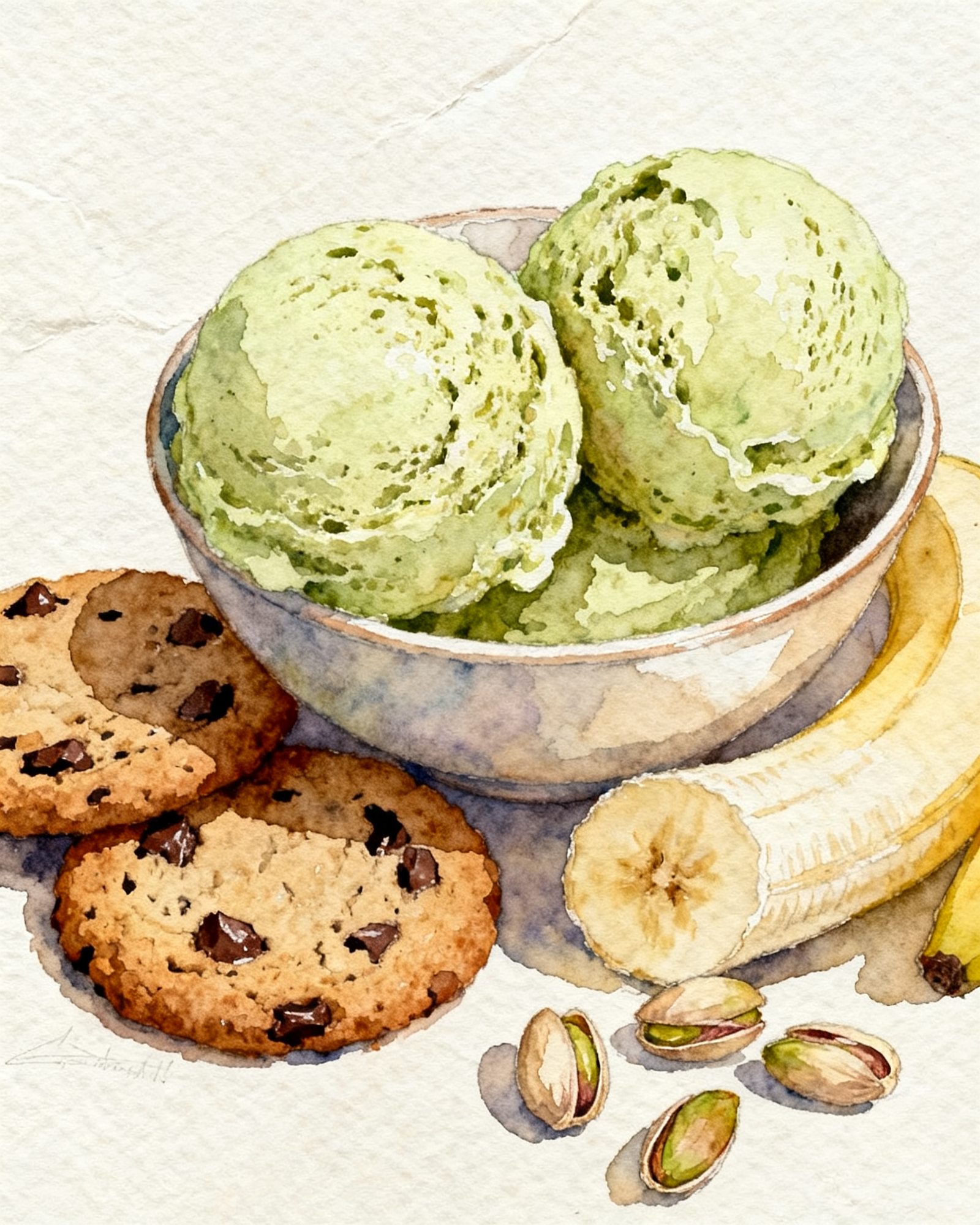
Makes About 20 cookies, 1 cookie per serving
Ingredients
- 1 tbsp ground flaxseed
- 1 1/2 fl oz (about 45 g) water, 3 tbsp
- 1 cup (125 g) all-purpose flour, spooned into the cup and leveled
- 1/2 tsp baking soda
- 1/2 tsp ground cinnamon
- 1/4 tsp fine salt
- 1/2 cup (110 g) vegan butter (a plant-based stick), softened (USDA has no vegan butter record; the nutrition uses its stick margarine record, and brands differ, especially in saturated fat)
- 1/2 cup (110 g) light brown sugar, packed
- 1/4 cup (50 g) granulated sugar
- 1 tsp vanilla extract
- 1 1/2 cups (120 g) old-fashioned rolled oats
- 1 cup (93 g) sweetened shredded coconut
Equipment
- Small bowl
- Stand mixer or hand mixer
- Large and medium mixing bowls
- Two rimmed baking sheets
- Parchment paper
- Wire rack
Method
In a small bowl, stir the ground flaxseed and water together and let it stand for 5 minutes, until thick and gel-like.
In a medium bowl, whisk the flour, baking soda, cinnamon and salt.
In a large bowl, beat the softened vegan butter, brown sugar and granulated sugar with a mixer on medium speed for about 2 minutes, until creamy and lighter in color. Beat in the flax mixture and vanilla until combined.
Add the flour mixture and mix on low speed just until no dry flour remains. Stir in the oats and coconut with a spatula. Squeeze a little dough in your hand: it should hold together. If it crumbles, mix in up to 1 more tablespoon of water.
Cover the bowl and refrigerate for at least 30 minutes, until the dough is firm and the oats have softened slightly.
Heat the oven to 350°F (175°C) with a rack in the center. Line two baking sheets with parchment paper.
Scoop the dough into 2-tablespoon portions (about 34 g each), roll into balls and set them 2 inches apart, 10 to a sheet. Press each ball down lightly with your palm to about 1/2 inch thick.
Bake one sheet at a time for 10 to 12 minutes, until the edges and the coconut on top are golden brown and the centers look soft and slightly puffed.
Let the cookies cool on the baking sheet for 5 minutes, until firm enough to lift, then move them to a wire rack to cool. Bake the second sheet the same way.
Nutrition per serving
| Calories | 140 |
|---|---|
| Total fat | 7 g |
| Saturated fat | 2.5 g |
| Carbohydrate | 19 g |
| Fiber | 1 g |
| Total sugars | 10 g |
| Protein | 2 g |
| Sodium | 115 mg |
| Calcium | 10 mg |
| Iron | 0.7 mg |
Per serving, calculated from USDA FoodData Central values for the ingredients and amounts listed. Calories, fat, carbohydrate, fiber, sugars, protein and sodium are rounded with the FDA Nutrition Facts label rules; calcium is shown to the nearest 10 mg and iron to the nearest 0.1 mg. Brands differ, so treat the figures as estimates.
How these numbers were calculated
Each ingredient as weighed for the calculation and the USDA FoodData Central record its nutrients come from. Where USDA has no record for an ingredient (vegan butter, nutritional yeast, coconut sugar), the closest generic record is used and named here.
| Ingredient | Grams | USDA record |
|---|---|---|
| 1 tbsp ground flaxseed | 7 g | FDC 169414: Seeds, flaxseed (SR Legacy). Weight from: USDA portion '1 tbsp, ground' |
| 1 1/2 fl oz (about 45 g) water, 3 tbsp | 45 g | FDC 2710707: Water, tap (FNDDS 2021-2023). Weight from: USDA portion '1 fl oz' |
| 1 cup (125 g) all-purpose flour, spooned into the cup and leveled | 125 g | FDC 168894: Wheat flour, white, all-purpose, enriched, bleached (SR Legacy). Weight from: USDA portion '1 cup' |
| 1/2 tsp baking soda | 2.3 g | FDC 175040: Leavening agents, baking soda (SR Legacy). Weight from: USDA portion '1 tsp' |
| 1/2 tsp ground cinnamon | 1.3 g | FDC 171320: Spices, cinnamon, ground (SR Legacy). Weight from: USDA portion '1 tsp' |
| 1/4 tsp fine salt | 1.5 g | FDC 173468: Salt, table (SR Legacy). Weight from: USDA portion '1 tsp' |
| 1/2 cup (110 g) vegan butter (a plant-based stick), softened (USDA has no vegan butter record; the nutrition uses its stick margarine record, and brands differ, especially in saturated fat) | 112 g | FDC 2710159: Margarine, stick (FNDDS 2021-2023). Weight from: USDA portion '1 cup' |
| 1/2 cup (110 g) light brown sugar, packed | 110 g | FDC 168833: Sugars, brown (SR Legacy). Weight from: USDA portion '1 cup packed' |
| 1/4 cup (50 g) granulated sugar | 50 g | FDC 169655: Sugars, granulated (SR Legacy). Weight from: USDA portion '1 cup' |
| 1 tsp vanilla extract | 4.2 g | FDC 173471: Vanilla extract (SR Legacy). Weight from: USDA portion '1 tsp' |
| 1 1/2 cups (120 g) old-fashioned rolled oats | 121.5 g | FDC 173904: Cereals, oats, regular and quick, not fortified, dry (SR Legacy). Weight from: USDA portion '1 cup' |
| 1 cup (93 g) sweetened shredded coconut | 93 g | FDC 168586: Nuts, coconut meat, dried (desiccated), sweetened, shredded (SR Legacy). Weight from: USDA portion '1 cup, shredded' |
Oatmeal coconut cookies are soft, chewy drop cookies with golden edges, toasty shreds of coconut on the surface and a warm hint of cinnamon. This version has no eggs and no dairy: a flax egg binds the oats and coconut, and vegan butter creamed with brown sugar gives the chew. The dough is quick to make, and the only waiting is a short chill that keeps the cookies thick instead of thin and lacy.
The binder: a flax egg instead of an egg
In an oatmeal cookie the egg mainly holds the loose oats and coconut together and adds moisture. Ground flaxseed does the same job well. Stirred into water, it forms a thick, slightly stretchy gel within a few minutes, and that gel sticks the dry ingredients together the way egg would. The card uses 1 tablespoon of ground flaxseed to 3 tablespoons of water, the usual replacement for one egg.
Two details make it work. The flaxseed must be ground, because whole seeds release too little gel to bind the dough. And give it the full 5 minutes to thicken before you add it to the creamed butter and sugar. Golden and brown flaxseed both work; golden flax is less visible in the finished cookies. For other ways to replace eggs and what each one does to a bake, see the egg substitutes guide.
Choosing the oats and the coconut
Old-fashioned rolled oats give the classic chewy, slightly rugged oatmeal cookie, with oats you can see and bite. Quick oats work, but they are cut finer and absorb more moisture, so the cookies come out softer and more uniform. Steel-cut oats stay hard after a short bake and are not suitable. Instant oatmeal packets are usually flavored and sweetened, so leave those out.
Sweetened shredded coconut is the moist, slightly sticky kind sold in bags for baking, and it is what the nutrition on the card is calculated for. It adds sweetness and chew, and the shreds on the outside of each cookie toast to gold in the oven. Unsweetened shredded coconut works too but bakes up drier and less sweet. Fine desiccated coconut soaks up more moisture than shreds, so if you use it, squeeze a bit of dough to make sure it still holds together.
Why the dough chills and the balls get pressed
Thirty minutes in the refrigerator firms the vegan butter, which slows spreading in the oven, and lets the oats and flour start absorbing the moisture from the flax egg. Cookies baked from warm dough spread wider and thinner, with crisp, lacy edges and less chew.
Oatmeal cookie dough, on the other hand, does not spread as much as a plain butter-and-sugar dough, because the oats and coconut hold it up. That is why the card has you press each ball down lightly to about 1/2 inch thick before baking. Without that step the cookies can stay domed, with a pale, doughy center.
How to tell when they are done
Bake at 350°F (175°C) for 10 to 12 minutes, until the edges and the coconut on top are golden brown and the centers look soft and a little puffed. The centers will seem underdone, and that is the point: the cookies firm up on the hot baking sheet during their 5-minute rest and set into a chewy middle as they cool. Left in until the centers look dry, they turn crisp and crumbly once cool.
Bake one sheet at a time on the center rack for the most even color, and put the second batch on a cool sheet, not one that just came out of the oven.
Chewy, soft or crispy: steering the texture
The card is written for chewy cookies with golden edges. Small changes move them in either direction:
| You want | Change | Why it works |
|---|---|---|
| Chewy (the card) | Rolled oats, sweetened coconut, chilled dough, pull them while the centers look soft | Brown sugar and moist coconut hold water; a short bake keeps the centers bendy. |
| Softer and thicker | Use quick oats for half of the rolled oats and press the balls only lightly | Finer oats absorb more moisture and give a more uniform, cakier crumb. |
| Crisp all the way through | Press the balls thinner and bake a few minutes longer, until the centers are golden too | More of the cookie dries out and browns. |
| Thin and lacy | Skip the chill and do not press | Warm dough spreads before it sets, giving wide cookies with crisp, lacy edges. |
Swaps: fat, flour and sugar
Coconut oil instead of vegan butter
Coconut oil works in place of the vegan butter, measured the same way, but use it soft and scoopable, not melted, so it can be creamed with the sugars. Refined coconut oil tastes neutral; virgin coconut oil adds more coconut flavor, which suits these cookies. Coconut oil is all fat with no water, while vegan butter contains some water, so the dough can be a little drier and the cookies slightly crisper: squeeze the dough and add up to 1 tablespoon of water if it crumbles. Melted coconut oil makes the cookies spread thin and greasy, and a chill is even more important because the oil firms up only when cold.
Other flours
- Coconut flour: it absorbs far more liquid than wheat flour, so it cannot replace the flour cup for cup. Replace no more than about 2 tablespoons of the flour with it if you want extra coconut flavor, and check that the dough still holds together.
- Oat flour: grind rolled oats in a blender until fine for an all-oat cookie. The cookies are more tender and crumbly, because oat flour does not develop gluten the way wheat flour does. For celiac disease, both the oats and the oat flour must be certified gluten-free.
- Gluten-free blend: a cup-for-cup blend works most simply; see the allergy notes below.
Less sugar
You can cut the granulated sugar back by half without other changes; the cookies spread a little less and the edges are less crisp. Cutting the brown sugar as well makes them drier and less chewy, because the brown sugar is what holds moisture. Unsweetened coconut also lowers the sweetness (see the FAQ).
Variations
- Chocolate chip: stir in 1/2 cup of dairy-free chocolate chips with the oats, and check the label, since some chips contain milk ingredients. For a cookie that is all about the chocolate, the vegan chocolate chip cookies use the same creaming method.
- Raisin or cranberry: add 1/2 cup of raisins or dried cranberries. Soaking raisins in hot water for a few minutes and draining them well keeps them plump.
- Toasted nut: fold in 1/2 cup of chopped toasted walnuts or pecans. This adds tree nuts; see the allergy note below.
- Cranberry and white chocolate: add 1/4 cup of dried cranberries and 1/4 cup of dairy-free white chocolate chips. Many white chocolate chips contain milk, so read the label.
- No-bake oatmeal coconut cookies are a different recipe: oats and coconut stirred into a cooked cocoa and sugar mixture and left to set, with no flour and no oven.
- Ice cream sandwiches: sandwich softened banana nice cream between two cooled cookies and freeze until firm. Chewy oatmeal cookies bend without cracking when you bite.
Common problems and how to fix them
- Flat, greasy cookies: the vegan butter was too soft or the dough was warm. Chill longer and use a cool baking sheet.
- Thick, pale and doughy: the balls were not pressed down, or the oven runs cool. Press them to about 1/2 inch and use an oven thermometer if your oven’s temperature is uncertain.
- Crumbly dough that will not hold together: the flour was packed or the coconut was very dry. Mix in up to 1 tablespoon of water.
- Hard cookies the next day: they were baked too long. Pull the next batch while the centers still look soft.
Storing and freezing
Once completely cool, keep the cookies in an airtight container at room temperature; they stay soft for several days, and a slice of bread in the container helps. They also freeze well in a sealed bag. The dough can also wait, covered, in the refrigerator for a day before baking; the oats soften a little more, and the cookies spread slightly less. Raw dough balls can be frozen on a lined tray, packed in a freezer bag and baked from frozen at the same temperature, adding a minute or two. Bake the dough before eating any of it, frozen or not: it contains raw flour, and the FDA says: “Never eat or taste raw flour, dough, or batter.” FoodSafety.gov notes that freezer storage times are for quality only, so for the best flavor use frozen dough and cookies within a few months.
Allergy and ingredient notes
This recipe contains wheat (all-purpose flour, which contains gluten) and coconut. The vegan butter may contain soy or coconut oil depending on the type, so check its label if you avoid either. The cookies contain no nuts as written, unless you add the nut variation. For a gluten-free batch, use a cup-for-cup gluten-free flour blend and certified gluten-free oats: the NIDDK advises people with celiac disease who eat oats to make sure they are gluten-free, because cross-contact between oats and grains that contain gluten is common. The cookies are then made with gluten-free ingredients; check labels for cross-contact. If coconut is a problem, replace it with an extra 1/2 cup of rolled oats and 1/2 cup of raisins. If you want to see the nutrition behind these swaps, datafood.co offers calorie and macro calculators that show the error band around every number.
Common questions
What can I use instead of an egg in oatmeal cookies?
A flax egg is the simplest: 1 tablespoon of ground flaxseed stirred into 3 tablespoons of water and left for 5 minutes until it turns gel-like. It holds the oats and coconut together and adds a mild nutty taste that suits oatmeal cookies. Unsweetened applesauce also binds, but it makes the cookies softer and more cake-like.
Can I use quick oats instead of rolled oats?
Yes, but the texture changes. Quick oats are cut finer, so they absorb more moisture and give a softer, more uniform, less chewy cookie that spreads a little less. Steel-cut oats do not work here: they stay hard and gritty because they do not soften in the short baking time.
Why are my oatmeal cookies dry and crumbly?
Usually the flour was packed into the cup, which adds extra flour, or the cookies stayed in the oven until the centers looked done. Spoon the flour into the cup and level it, and take the cookies out when the centers still look soft. If the dough itself crumbles when squeezed, a tablespoon of water brings it together.
Can I use coconut oil instead of vegan butter?
Yes, in the same amount, as long as it is soft and scoopable rather than melted, so it creams with the sugars. Coconut oil has no water, so the cookies come out slightly crisper, and the dough may need up to a tablespoon of water to hold together. Chill the dough well before baking.
Can I use unsweetened coconut?
Yes. Unsweetened shredded coconut is drier and less sweet, so the cookies are a little less chewy and less sweet. Fine desiccated coconut absorbs more moisture than shredded; if you use it, check that the dough still holds together when squeezed and add a little water if it does not.
Are oatmeal cookies gluten-free?
Not as written: the all-purpose flour contains gluten. With a gluten-free flour blend and certified gluten-free oats they are made with gluten-free ingredients; check labels for cross-contact. The NIDDK notes that cross-contact between oats and grains that contain gluten is common.
Sources
Read next
Vegan chocolate chip cookies: chewy, golden, no eggs
Chewy vegan chocolate chip cookies made with vegan butter and no eggs: why brown sugar and chilling matter, when to pull them, ice cream sandwiches, freezing.
No-bake cookie dough bars with a chocolate top
Vegan no-bake bars of edible cookie dough made with store-bought heat-treated flour: why raw ordinary flour is unsafe, a clean chocolate top and storage.
Vegan pistachio ice cream
A coconut-milk pistachio ice cream with real pistachio flavor and no green dye: blending the nuts, a chilled base that churns smooth, plus a no-churn method.
Tofu scramble that tastes like breakfast
A tofu scramble with soft curds and an eggy note: which tofu to buy, how dry it should be, turmeric, nutritional yeast and kala namak, plus vegetables to add.
Overnight oats: the base ratio and make-ahead jars
Vegan overnight oats with the right ratio of rolled oats, chia and plant milk, why rolled oats work best, five flavor ideas and how long the jars keep.