Egg substitutes for vegan baking and cooking
Which egg substitute to use and how much: flax and chia eggs, aquafaba, banana, applesauce, silken tofu and replacers, matched to the job the egg was doing.
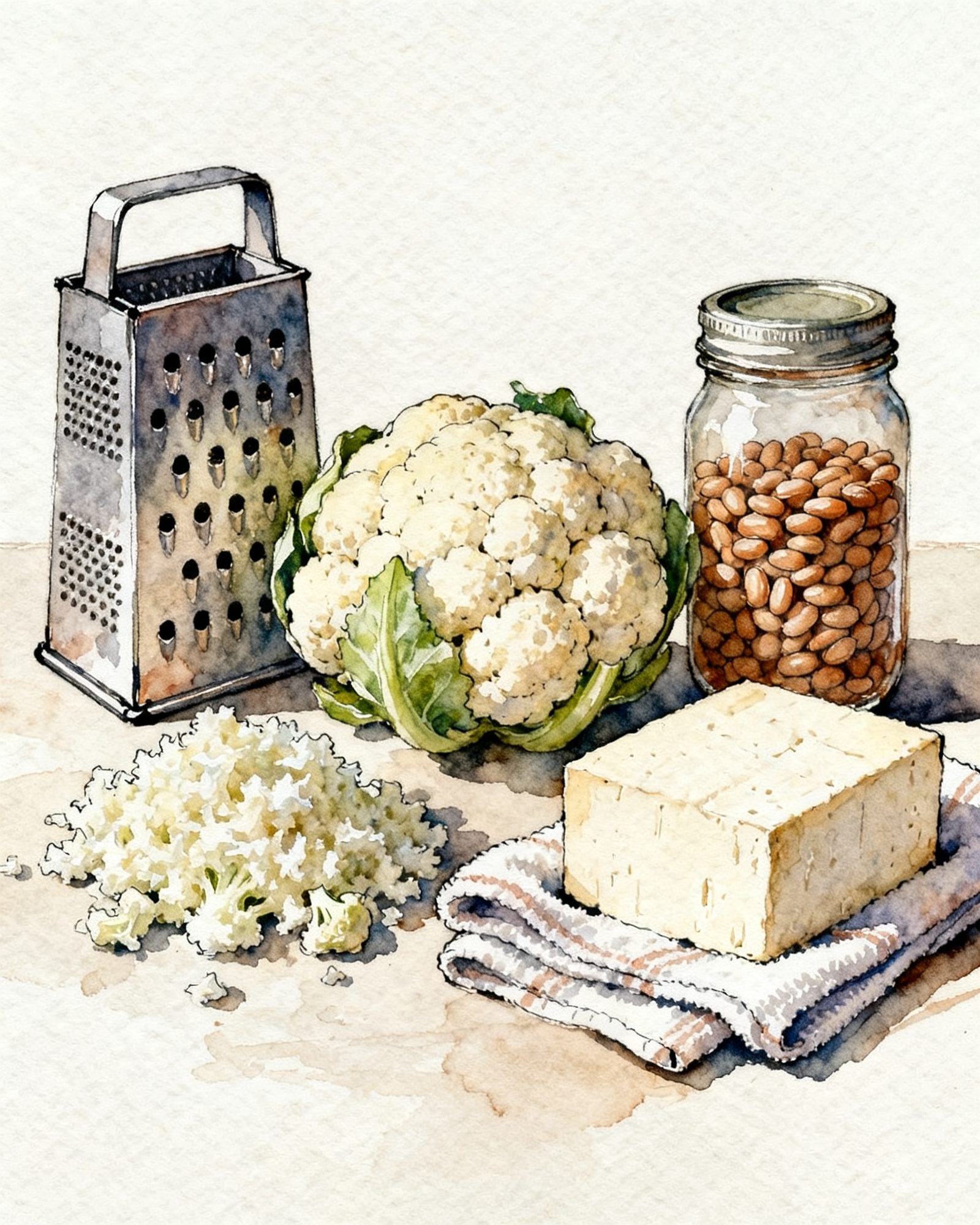
An egg is several ingredients in one. In a cookie it binds the dough, in a sponge cake it traps air, in a muffin it adds moisture and in a custard it is the thing that sets. No plant-based substitute does all of that at once, which is why a swap that works perfectly in one recipe fails in another. The trick is to work out what the egg was doing and pick the substitute that does that job. The amounts below are common kitchen conventions, starting points rather than laboratory measurements.
What eggs actually do in a recipe
Before you choose a substitute, look at the recipe and ask which of these jobs the eggs are doing:
- Binding. Egg proteins set when heated and hold crumbs, oats or vegetables together: cookies, pancakes, veggie patties, meatballs.
- Lift. Beaten eggs, and especially whipped whites, trap air that expands in the oven: sponge cakes, meringues, soufflés.
- Moisture and richness. Eggs are mostly water, and the yolk adds fat: muffins, quick breads, brownies.
- Structure. In some dishes the egg is the structure, setting a liquid into a solid: custards, quiche, flan.
- Emulsifying. Yolks help oil and water stay mixed: mayonnaise, some dressings and sauces.
Most baking recipes lean on one or two of these. A recipe that uses one or two eggs mainly for binding or moisture is easy to adapt. A recipe that uses four eggs for lift and structure is not.
The common substitutes, one by one
Flax egg
Stir 1 tablespoon of ground flaxseed into 3 tablespoons of water and leave it for a few minutes until it thickens into a gloppy gel, something like a loose egg white. That replaces one egg. Use ground seeds: whole flaxseed thickens the water far less and stays as hard little seeds in the finished bake. Golden flaxseed gives a paler result than brown.
A flax egg is a reliable binder with a mild, nutty flavor and small visible flecks. It suits cookies, pancakes, muffins, quick breads and brownies, as well as savory patties; vegan buckwheat pancakes use one as their binder. It adds no lift, so cakes made with it come out a little denser. Flaxseed is also one of the plant foods the NIH Office of Dietary Supplements lists as a source of ALA, the plant omega-3 fat.
Chia egg
The chia version is the same ratio: 1 tablespoon of chia seeds to 3 tablespoons of water, left until it gels. Chia seeds take up a lot of liquid; the American College of Gastroenterology notes that they can absorb up to 27 times their weight in water. Use whole seeds where small specks do not matter, or grind them for a smoother look. The same organization advises that chia seeds should never be eaten dry and should always be allowed to expand in liquid first; in a chia egg and in the batter they are fully soaked. A chia egg works wherever a flax egg does.
Aquafaba
Aquafaba is the cooking liquid from chickpeas, usually poured from a can. It behaves surprisingly like egg white: it binds, and when whipped for several minutes, ideally with a pinch of cream of tartar, it turns into a glossy foam that holds peaks. By convention, 3 tablespoons replace one whole egg and 2 tablespoons replace one egg white.
Use it for meringues, mousse and light cookies, or unwhipped as a binder. Choose unsalted canned chickpeas when you can, so the liquid does not add salt to a sweet recipe. Liquid from home-cooked chickpeas also works if it is thick; if it is thin and watery, simmer it down until it looks like the liquid from a can. University of Nebraska-Lincoln Extension says that a recipe calling for one 15-ounce can of beans needs 1 3/4 cups of cooked beans, drained, which helps if you cook your own chickpeas; the guide to cooking dried beans covers the method.
Mashed banana
A quarter cup of well-mashed ripe banana replaces one egg. It binds and adds moisture and sweetness, but also banana flavor and a denser crumb. It is at its best where banana is welcome: pancakes, muffins, quick breads and brownies.
Unsweetened applesauce
A quarter cup of unsweetened applesauce replaces one egg, adding moisture with only a faint apple taste. Baked goods made with it are moist and tender but can be dense and slightly gummy; some bakers add a little extra baking powder to compensate. Applesauce suits muffins, quick breads, snack cakes and spice cakes.
Silken tofu
Blend a quarter cup of silken tofu until completely smooth to replace one egg. It adds richness and moisture without much flavor and gives a dense, fudgy or custardy texture, which works in brownies, quick breads and cream-style pie fillings. For savory dishes where eggs are the main event, such as scrambled eggs or frittatas, firm tofu stands in for the whole dish rather than for single eggs; see tofu scramble.
Baking soda and vinegar
For lift in cakes and cupcakes, a common convention is 1 teaspoon of baking soda plus 1 tablespoon of vinegar per egg. Whisk the soda into the dry ingredients and the vinegar into the wet, combine them and get the batter into the oven promptly, because the bubbles start forming as soon as the two meet. It adds lift only, so it is often paired with applesauce or a flax egg in the same recipe.
Cornstarch or arrowroot slurry
Whisk 2 tablespoons of cornstarch or arrowroot into 3 tablespoons of water per egg. Starch thickens and sets as it heats, so it binds without adding flavor or color. It suits cookies, pale cakes, custard-style fillings and sauces, and it is a good choice when flax flecks or banana flavor would show. It adds no lift.
Chickpea flour
Chickpea flour (also sold as gram or besan flour) whisked with an equal amount of water, 3 tablespoons of each per egg, makes a thick batter that binds and sets firmly when cooked. It is best in savory food: fritters, veggie burgers, frittata-style bakes and vegan omelets. Raw chickpea flour tastes beany and bitter, so cook it through; in sweet recipes the taste can show.
Plant yogurt
A quarter cup of unsweetened plant yogurt per egg adds moisture and a little tang, and its acidity helps baking soda work. Use it in muffins, quick breads, snack cakes and cornbread. Soy and coconut yogurts behave differently: soy is higher in protein and sets more firmly, coconut adds fat and richness.
Oil, water and baking powder
For one egg in a cake or cupcake batter, a long-standing convention is 1 1/2 tablespoons of neutral oil, 1 1/2 tablespoons of water and 1 teaspoon of baking powder, mixed together just before adding. It supplies the fat, liquid and lift an egg would, without binding, and suits recipes that use one egg in a tender cake.
Liquid plant-based egg
Cartons of liquid plant-based egg, often made from mung bean protein, scramble like eggs and can replace eggs in baking at the amount the package gives. They are the closest single product to a whole egg, but they are processed foods with their own ingredient lists: check for allergens and salt.
Commercial egg replacers
Powdered egg replacers are usually blends of starches with leavening agents. Follow the package for how much powder and water make one egg. They are neutral in flavor and work well in cookies and cakes. Two cautions: read the ingredient list for allergens, and do not confuse them with the cartons of “egg substitute” sold in the dairy case, many of which are made from egg whites and are not vegan.
Egg substitutes compared
| Substitute | Per egg (kitchen convention) | Main job | Best in | Watch out for |
|---|---|---|---|---|
| Flax egg | 1 tbsp ground flaxseed + 3 tbsp water | Binding | Cookies, pancakes, muffins, patties | Nutty taste, flecks; no lift |
| Chia egg | 1 tbsp chia seeds + 3 tbsp water | Binding | Same as flax | Visible seeds unless ground |
| Aquafaba | 3 tbsp (2 tbsp per white) | Lift and binding | Meringues, mousse, light cookies | Needs long whipping; thin liquid must be reduced |
| Mashed banana | 1/4 cup | Moisture and binding | Pancakes, muffins, brownies | Banana flavor, denser crumb |
| Applesauce | 1/4 cup, unsweetened | Moisture | Muffins, quick breads, snack cakes | Can turn dense or gummy |
| Silken tofu | 1/4 cup, blended smooth | Moisture and richness | Brownies, quick breads, pie fillings | Heavy texture; blend fully |
| Baking soda + vinegar | 1 tsp soda + 1 tbsp vinegar | Lift | Cakes, cupcakes | Bake right away; no binding |
| Cornstarch or arrowroot | 2 tbsp + 3 tbsp water | Binding, setting | Cookies, pale cakes, fillings | No lift |
| Chickpea flour | 3 tbsp + 3 tbsp water | Binding, structure | Fritters, burgers, omelets | Beany taste unless cooked through |
| Plant yogurt | 1/4 cup, unsweetened | Moisture, some binding | Muffins, cornbread, snack cakes | Sweetened yogurt adds sugar |
| Oil + water + baking powder | 1 1/2 tbsp oil + 1 1/2 tbsp water + 1 tsp baking powder | Lift, moisture | Tender cakes with one egg | No binding |
| Liquid plant-based egg | As the package says | Binding, structure, scrambling | Scrambles, quiche-style bakes, baking | Processed; check allergens and salt |
| Commercial replacer | As the package says | Binding, some lift | Cookies, cakes | Check labels for allergens |
Matching the substitute to the recipe
- Cookies: a flax egg or a commercial replacer. Many vegan cookie recipes need no replacement at all, because the fat, sugar and flour hold the dough together. A recipe written to be vegan from the start, such as vegan chocolate chip cookies, is balanced without eggs, so there is nothing to replace.
- Pancakes and waffles: a flax egg or mashed banana.
- Muffins and quick breads: flax, banana or applesauce, alone or combined.
- Cakes and cupcakes: baking soda and vinegar for lift, with applesauce or a commercial replacer for moisture and binding.
- Brownies: flax, banana or silken tofu, for a fudgy result.
- Meringues and mousse: aquafaba, whipped.
- Banana bread: mashed banana is already in the batter, so a flax egg or 1/4 cup applesauce per egg is enough; extra banana makes it heavy and gummy.
- Waffles: a flax egg, or the oil, water and baking powder mix, keeps them crisp; banana and applesauce make them soft.
- Cornbread: plant yogurt or a flax egg.
- Patties, fritters and meatballs: a flax egg, often with breadcrumbs or oats, to bind grated vegetables, beans or cauliflower rice. Spaghetti with vegan meatballs shows a binder at work.
Boxed mixes, egg washes and breading
Cake, brownie and muffin mixes. Replace each egg the box calls for with a flax egg or 3 tablespoons of aquafaba for brownies, and with 1/4 cup of applesauce or plant yogurt for cakes and muffins, plus the oil and water the box lists. Many mixes contain milk ingredients, so read the ingredient list first if you need the result to be vegan. Mixes contain raw flour, and the FDA’s advice is to “Never eat or taste raw flour, dough, or batter,” so bake before tasting.
Egg wash for shine. Brush pastry, bread or pie crust with plant milk mixed with a little maple syrup or neutral oil. It browns and shines, though less than egg. Aquafaba brushed on thinly also gives a light gloss and helps seeds stick.
Breading and dredging. The egg’s job here is glue between the flour and the crumbs. Use a three-bowl setup as usual: plain flour, then a thick wet dip, then crumbs. For the dip, whisk plant milk with a tablespoon or two of flour or cornstarch until it coats a spoon, or use aquafaba or thinned plant yogurt. For oven-baked coatings, a thin layer of mustard or vegan mayonnaise holds crumbs well.
Mayonnaise and emulsions. Aquafaba or blended silken tofu, whisked or blended with oil added in a thin stream, makes an egg-free mayonnaise; the protein in each helps hold the oil and water together.
Where no substitute works well
Some recipes depend on eggs so heavily that swapping them out produces a different, usually disappointing, dish:
- Angel food cake, chiffon and classic sponge cakes, which rise almost entirely on whipped eggs.
- Soufflés and popovers, for the same reason.
- Custards, flan and crème brûlée, where eggs are what sets the liquid.
- Choux pastry, which needs egg to puff and hold its hollow shape.
- Quiche and frittata, which are mostly egg.
- Any recipe calling for three or more eggs. Each substitute adds its own moisture, flavor and density, and the effects pile up.
For these, look for a recipe developed to be vegan rather than adapting the original. Vegan custards and pies are usually set with starch, and a vegan quiche is built on tofu.
Getting good results
Swap one thing at a time: replace the eggs and keep everything else as written. Expect egg-free bakes to be slightly denser and moister, and judge doneness by the usual cues, such as a toothpick that comes out clean or with a few moist crumbs and edges that look set, rather than by the clock alone. Mix just until combined, especially in muffins and quick breads made with wheat flour, since overmixing develops gluten and makes them tough.
Allergy notes
Many people use egg substitutes because of an egg allergy, so the substitute itself has to be safe for them too. Flax and chia are seeds; silken tofu contains soy; aquafaba and chickpea flour come from chickpeas, and most liquid plant-based eggs from mung beans, both legumes; plant yogurts may be made from soy, coconut or nuts; and commercial replacers vary, so read every label, including any “may contain” statement. Anyone managing a food allergy should check with their doctor or a registered dietitian about which ingredients are safe.
Common questions
What is the best egg substitute for baking?
There is no single best one, because eggs do different jobs in different recipes. A flax egg is the most versatile binder for cookies, muffins and pancakes; aquafaba is the choice when eggs are whipped for lift; mashed banana or applesauce add moisture to quick breads. Match the substitute to what the egg was doing.
How do I make a flax egg?
Stir 1 tablespoon of ground flaxseed into 3 tablespoons of water and leave it for a few minutes, until it turns thick and gloppy, like a loose egg white. Use it in place of one egg. Ground seeds work far better than whole ones, which thicken the water much less and stay hard in the finished bake.
How much aquafaba equals one egg?
By common kitchen convention, 3 tablespoons of aquafaba replaces one whole egg and 2 tablespoons replaces one egg white. Shake or whisk the liquid from the can before measuring, since it can settle.
Can I use chia seeds instead of flaxseed?
Yes, in the same amounts: 1 tablespoon of chia seeds to 3 tablespoons of water per egg. Whole chia seeds stay visible as small dark specks, so grind them if appearance matters. Let the mixture gel fully before using it.
What can I use instead of egg to make breadcrumbs stick?
Dip the food in a thick liquid that clings: unsweetened plant milk whisked with a spoonful of flour or cornstarch, aquafaba, or plant yogurt thinned with a little water. Dust the food in plain flour first, then the wet dip, then the crumbs, pressing them on. A thin layer of mustard or vegan mayonnaise also works for oven-baked coatings.
Can I replace the eggs in any recipe?
No. Substitutes work best in recipes that use one or two eggs as a binder or for moisture. Where eggs are the main structure, as in soufflés, custards, angel food cake and choux pastry, no simple swap holds up, and a recipe written to be vegan works far better.
Sources
Read next
How to press tofu, and when you don't need to
How to press tofu with a towel and weight or a press, which tofu needs it and which never does, freezing for chew, crisp baking and frying, and storage.
How to cook dried beans and chickpeas
How to cook dried beans and chickpeas: three soaking methods, stovetop and pressure-cooker times from UNL Extension, the kidney bean rule and safe storage.
Coconut whipped cream
How to make coconut whipped cream: chilling the can, scooping off the cream, why some cans will not whip, sweetening, keeping it stable, and storing it.
Vegan pistachio ice cream
A coconut-milk pistachio ice cream with real pistachio flavor and no green dye: blending the nuts, a chilled base that churns smooth, plus a no-churn method.
No-bake vegan pistachio cheesecake bars
No-bake vegan pistachio cheesecake bars: a cashew filling on an almond-date crust with a pistachio layer; soaking, blending smooth, freezing and cutting clean.